Highlight Reel
Sermon Summary
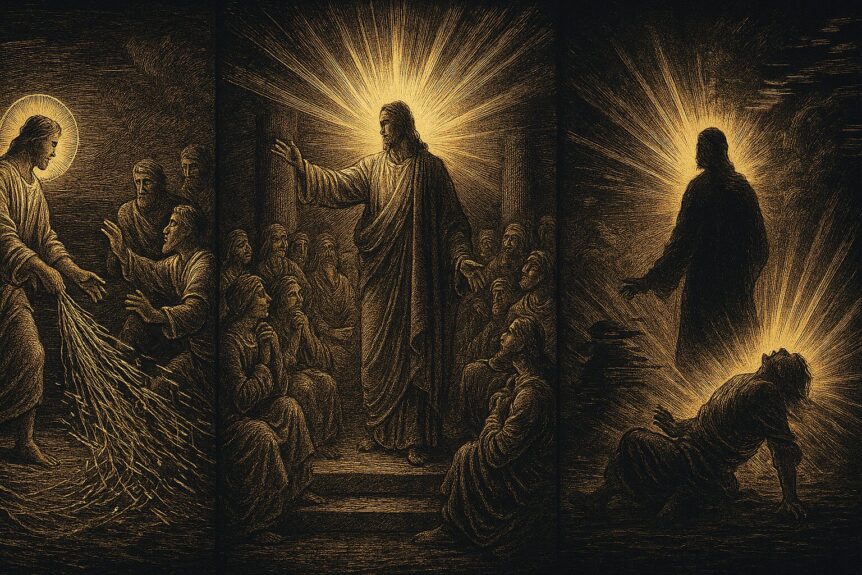
Mark’s gospel opens with an undeniable declaration: Jesus alone wields total authority. From the shore of Galilee to the synagogue and beyond, His call changes fishermen’s destinies, His teaching astonishes scholars, and His power over demons silences darkness. This authority demands a personal response—complete obedience and trust in Christ’s kingdom reign today.
Sermon Audio
Shareable Quote graphics


Sermon Text
A New Kind of Authority
Nate Roten / Mark / Mark 1:16–28 / August 24, 2025
Main Idea
Jesus has total authority.
Have you ever been in a classroom with a substitute teacher? The students know right away—while this person technically has some level of authority here, this isn’t the regular teacher. And what usually happens? The whispering starts, the jokes get louder, and the class gets just a little bit wild. The substitute has the title of “teacher,” but the students instinctively, albeit inappropriately, know the authority isn’t quite the same, so they test the limits.
Now contrast that with the moment the principal walks in. The same room, which was buzzing with chaos, goes silent instantly when the principal says, “Sit down.” No questions, no arguments, no second guesses. The presence of true authority changes everything.
That’s exactly what happens in our passage today. The people had spent their entire lives listening to scribes—men who quoted traditions and relied on borrowed authority. But when Jesus arrived on the scene, everything changed. From the very first moment He speaks, His words pierce through the noise with the authority of heaven itself.
Let’s read together:
Passage
Mark 1:16–28 CSB
16 As he passed alongside the Sea of Galilee, he saw Simon and Andrew, Simon’s brother, casting a net into the sea—for they were fishermen. 17 “Follow me,” Jesus told them, “and I will make you fish for people.” 18 Immediately they left their nets and followed him. 19 Going on a little farther, he saw James the son of Zebedee and his brother John in a boat putting their nets in order. 20 Immediately he called them, and they left their father Zebedee in the boat with the hired men and followed him.
21 They went into Capernaum, and right away he entered the synagogue on the Sabbath and began to teach. 22 They were astonished at his teaching because he was teaching them as one who had authority, and not like the scribes.
23 Just then a man with an unclean spirit was in their synagogue. He cried out, 24 “What do you have to do with us, Jesus of Nazareth? Have you come to destroy us? I know who you are—the Holy One of God!”
25 Jesus rebuked him saying, “Be silent, and come out of him!” 26 And the unclean spirit threw him into convulsions, shouted with a loud voice, and came out of him.
27 They were all amazed, and so they began to ask each other, “What is this? A new teaching with authority! He commands even the unclean spirits, and they obey him.” 28 At once the news about him spread throughout the entire vicinity of Galilee.
I – Authority in the Call
Now that Jesus has been baptized in the Spirit and tested, proving Himself faithful, He is ready to build His team that will be trained in the ways of His kingdom and move against the forces of darkness. He is a recruiter just as much as He is a rabbi. Notice how Jesus is the One doing the pursuing.
Jesus sought. He went to the shores of the Sea of Galilee to find faithful followers, a few of whom He had already met according to John 1:35-42. He approached Simon (Peter), Andrew, and then James and John as they were prospering in their careers and family business. We see this from the fact that James and John were with their father, who also had hired hands. At least James and John were involved in a thriving fishing business they would likely inherit from their father when he decided to retire. Fish from the Sea of Galilee were abundant, diverse, and exported throughout the region, so they were engaged in a very prosperous career.
This aligns well with passages like Luke 19:10, which states that Jesus came to seek and save the lost, and Ephesians 1:4-6.
Ephesians 1:4–6 CSB
4 For he chose us in him, before the foundation of the world, to be holy and blameless in love before him. 5 He predestined us to be adopted as sons through Jesus Christ for himself, according to the good pleasure of his will, 6 to the praise of his glorious grace that he lavished on us in the Beloved One.
Jesus called. He called both sets of brothers to follow Him. First, we should recognize how unusual it is for a Rabbi to seek out students. Usually, if someone wanted to learn from a Rabbi, they would seek them out, and the Rabbi would decide among many applicants who to accept or reject. Jesus was different. He isn’t just a teacher but also God Himself, who seeks and calls whom He wills. He is also anointed by the Spirit of God as the Messiah, who rules with power and authority. This authority is shown in His simple call using two words: “Follow me.” He didn’t perform a miracle or use persuasive rhetoric. Instead, He asks for loyalty and trust and calls them into discipleship.
Jesus stated. Then he explained to the men what would happen if they followed Him. If they did, He would make them fishers of men. This was a statement of fact. Just as they cast a net to gather fish, remove them from their current environment, and bring them into a new one, they would do the same for people. This isn’t just a metaphor that highlights what they are currently doing. Many Old Testament passages refer to people being caught or fished for, but usually in the context of judgment, and often the sea is depicted as a place of darkness and chaos. Therefore, beyond the fishing metaphor that shows how they will influence others, it also has a deep theological meaning—illustrating how they will be used to draw people out of darkness, chaos, sin, and God’s wrath into a new environment where they can experience the presence of Christ.
Their immediate response: they leave everything behind! They abandon their tools and gear, their source of income, and the sons of thunder leave their father… and, as a result, their family fishing empire!
When Jesus called Simon, Andrew, James, and John, He didn’t just invite them into a Bible study or a casual apprenticeship—He called them into a completely new life. His words, “Follow Me,” carried the weight of divine authority. In an instant, these men abandoned the security of their careers, the familiarity of family, and the stability of what they had always known. Why? Because the call of Christ outweighed everything else.
And that same call rings out to us today. Jesus continues to see, seek, and call. He doesn’t wait for us to ask to be His disciples—He approaches us in grace and authority, saying, “Follow Me.” The question isn’t whether He has called, but whether we will answer.
For some of us, following Jesus means letting go of the pursuit of comfort, success, or recognition. For others, it might involve leaving behind habits, relationships, or ambitions that challenge His lordship. But for all of us, the call of Christ requires a reordering of our lives—our priorities, our identities, and our pursuits.
The disciples’ response was immediate. They didn’t weigh the pros and cons or negotiate the terms. They left everything behind and followed Him. Through their obedience, the world was turned upside down.
So, here’s the challenge: What nets are you still holding on to? What boats are you hesitant to leave behind? Which earthly pursuits feel too costly to give up? Jesus doesn’t just call us to admire Him—He calls us to follow Him. And in following Him, He promises to transform us, to shape us into something greater than we could ever become alone: fishers of people, instruments of His kingdom, ministers of reconciliation in the world.
The disciples sacrificed a lot, but they gained infinitely more. The same holds true for us. Following Jesus might cost us everything, but not following Him costs us even more.
II – Authority in Word
After leaving the shores with His four new disciples, Jesus traveled to a nearby town called Capernaum, where He would set up His base of operations. There was a synagogue in this town, which you can still visit today to see the ruins. Here, Jesus teaches.
Jesus began to teach. This likely happened with the permission of the synagogue ruler, who must have trusted Jesus to interpret the meaning of the day’s text. This is significant because, by this time, Jesus has clearly demonstrated His knowledge of Torah enough to be asked to teach it. Presumably, He was teaching about the good news of the Kingdom, as He indicated earlier in the chapter, but Mark doesn’t record the content of Jesus’ message. We will see the power of the Kingdom manifest in the miracles and the message of the Kingdom taught through the parables. We will even see Jesus explicitly state that His purpose and main mission are to teach in verse 38. But right now, Mark doesn’t include the content. Why? Because He is focused on the action—on what Jesus does that demonstrates who He is. Currently, Mark emphasizes the reality of Jesus’ authority.
Jesus was no ordinary teacher. The people were used to the scribes, who were experts in the Law (whom you might even call Torah Professors), and who relied on current and past rabbinical teachings and their established traditions to interpret the text. Right away, the people could recognize a huge difference in how Jesus taught compared to the scribes. The scribes might have had plenty of knowledge and charismatic personalities, but they lacked one crucial element… authority. Authority in teaching scripture can only come from the one who wrote it, and they didn’t have it, but Jesus is the divine Word, commissioned by the Father and anointed with the Spirit! Jesus has all authority to illuminate the minds of men to the truths of the holy scriptures!
The Jew’s reaction. Mark loves to highlight the strong emotional responses to Jesus. The Jews in the synagogue were astonished—so overwhelmed with amazement that they nearly lost their minds. Throughout their years of sitting at the feet of the scribes, they had never experienced the scriptures’ truths like this before. If Jesus can persuade four men to leave their livelihoods with just two simple words, imagine what it would have been like to sit through an entire sermon!
This is the second demonstration of authority. The question for us is not whether Jesus still speaks with authority, but whether we will submit to it. We live in a world filled with voices—teachers, experts, influencers, and traditions—that may be clever but, without Christ, lack true power. Only Christ’s words cut through confusion, awaken the heart, and call us to obedience. If the crowds in Capernaum were astonished, how much more should we be, who hold the full measure of His Word in our hands?
So, here’s the next challenge: Do you come to the Word expecting information or transformation? Do you listen to Jesus as one option among many, or as the final authority over every part of life? The people in the synagogue walked away in awe, realizing they were hearing from The Main Authority. And so do we—every time we hear, read, and obey His Word.
III – Authority in Works
Demon encounter. While the people were pulling their jaws from the floor, the scene takes a dark turn. As Jesus finishes His teaching, a man steps forward. It seems from the text that he was already there, but the authority of the Son of God compelled him to come forward. This man, who was possessed by a demon, appears to have been unnoticed in his condition until now.
Mark’s ongoing clash of kingdoms. This scene emphasizes the frequent conflict of kingdoms in Mark’s gospel. It’s no coincidence that one of Jesus’ first encounters, at least in Mark’s account, involves a demonic presence during the teaching of the gospel. And the possession is intense. In this encounter, the man isn’t the one speaking; the unclean spirit is. This illustrates complete enslavement. He isn’t being tempted or enticed; he is being controlled.
Demon’s recognition. There are several stunning recognitions here:
a. Recognition of the battle. What do you have to do with us? The oil of God’s kingdom has nothing to do with the water of Satan’s kingdom. They’ve never, nor will they ever, mix. They will always be diametrically opposed.
b. Recognition of Jesus’ humanity: Jesus of Nazareth. For some reason, this demon wants to voice his knowledge of who Jesus is as a human. Maybe he aims to demonstrate his own specialized knowledge to appear as His equal.
c. Recognition of Jesus’ divinity: Holy One of God. Isn’t it interesting that a demon would seemingly evangelize? Wouldn’t we applaud anyone today who spoke of Jesus’ humanity and divinity? Now, I don’t think the demon is trying to convert to Christianity. He is either trying to one-up Jesus or thwart His mission by trying to reveal who He is outside of God’s timetable.
d. Recognition of his fate: Have you come to destroy us? The demon already recognizes Jesus’ authority over him before he is cast out of the man!
e. Reinforcement of James 2:19: You believe that God is one. Good! Even the demons believe—and they shudder. This shows that simply believing in God’s existence isn’t enough. Just acknowledging that Jesus was a man or that He is the Holy One of God isn’t sufficient for salvation. This demon certainly wasn’t saved! True faith involves believing that Jesus is God, trusting that He died to pay the price for your sins, and submitting to His lordship—something this demon (or any other) would do.
Jesus’ response: Jesus issues two imperative commands, which are immediately obeyed.
a. Be silent (literally to be muzzled)… the same word used to silence the storm at sea.
b. Come out of him.
Like in the opening story, the principal is now in the room. Jesus does not perform a ritual of exorcism. He does not debate or negotiate; He commands. Jesus has complete authority over the demon. He briefly resists by throwing the man down and causing him to convulse, but resistance is useless. When Christ speaks, all the forces of darkness must obey.
The Jew’s response. Amazement. This word is slightly different from their astonishment at Jesus’ authoritative words. Witnessing Jesus’ power over the demonic realm left them in a state of wonder.
They have seen how this mysterious rabbi commands control and obedience over their sacred scriptures and the forces of the enemy. No one else has shown such authority. It almost sounds like they were unfamiliar with authoritative teaching, because they said that this was a new teaching with authority… Jesus spoke and acted with the authority of heaven. So, naturally, they immediately told everyone in town about Jesus and His unmatched authority.
Final Application Summary
In these opening scenes of Mark’s Gospel, we see Jesus call with authority, teach with authority, and work with authority. His words summon fishermen to leave their nets, His teaching leaves scholars amazed, and His commands silence demons. The picture is clear: there is no realm—human, spiritual, or cosmic—where Christ’s authority does not reign supreme.
But here’s the point: that same authority isn’t just a story from 2,000 years ago—it challenges us today. Jesus calls us to abandon lesser pursuits and follow Him. He invites us to sit under His Word, not just as information, but as the very voice of God. And He compels us to trust that no darkness in our lives, no sin, no stronghold, no fear is stronger than His command.
🔥 Application:
1. Total Authority Compels Total Surrender.
The crowds in Capernaum were amazed and spread the news of His power. Our response must be more than amazement. His call compels our surrender, His Word demands our obedience, and His power drives out every darkness that holds us captive.
The people of Capernaum walked away amazed, but we are called to walk away transformed—leaving everything to follow Him, trusting His Word, and proclaiming His name to the world.
➤ Challenge: Have you fully surrendered to Jesus’ authority and lordship?
FAQs
1. Why did Jesus call fishermen like Simon, Andrew, James, and John?
Jesus called ordinary fishermen because He was calling faithful followers to participate actively in His kingdom mission. They were prosperous and engaged in a thriving business, yet Jesus sought them out to become “fishers of people.” This shows Jesus’ initiating authority—He pursues and calls whom He wills (Luke 19:10; Ephesians 1:4–6). Their immediate response to abandon nets and family business highlights the compelling nature of His call.
2. What does it mean that Jesus taught “as one who had authority” unlike the scribes?
Jesus taught with inherent divine authority because He is the Word of God incarnate, the source of Scripture’s truth—not merely a human interpreter reliant on tradition. The scribes quoted and interpreted but lacked authority. Jesus’ teaching pierced hearts and astonished listeners because it was not just informative but transformative, demonstrating the authority of heaven itself.
3. Why was the crowd amazed at Jesus’ teaching?
The crowd had grown accustomed to the scribes’ legalistic and often dry teaching, which depended on human tradition. Jesus’ words carried fresh authority, power, and immediacy—they were new, direct from God, and life-changing. This astonishment reflects their recognition that Jesus was not an ordinary rabbi but the Holy One with divine authority.
4. What is the significance of Jesus commanding the unclean spirit to come out?
Jesus’ command over the demon powerfully demonstrates His sovereign authority over the spiritual realm. He neither negotiated nor performed rituals but simply commanded, showing His identity as the Messiah with power over darkness. The demon’s recognition of Jesus as “Holy One of God” and fear of destruction reveals a cosmic battle between kingdoms (Mark’s theme), confirming Jesus’ messianic authority.
5. How does Jesus’ authority challenge us today?
Jesus’ authority calls us to total surrender—leaving behind lesser pursuits and loyalties to follow Him fully. His Word demands obedience, not mere intellectual assent, and His power over sin and fear is present to deliver us. Like the crowds of Capernaum, we must respond with more than amazement; we must be transformed and compelled to trust and obey Christ’s lordship.
6. What does it mean to be a “fisher of people”?
This metaphor reflects the mission of bringing people out of darkness and chaos into God’s kingdom. Just as fishing involves removing fish from their environment, disciples are called to draw people from sin and judgment into salvation and new life in Christ. It is both a practical mission of evangelism and a theological statement about the rescue from spiritual death.
7. Why did the disciples leave everything immediately when Jesus called?
Their immediate response shows both Jesus’ compelling divine authority and their faith in Him. They abandoned careers, family ties, and security because His call carried ultimate weight—it was a call to new identity and mission that outweighed everything else. This radical discipleship mindset challenges us to examine what “nets” or “boats” we cling to that hinder following Christ fully.
8. How should we approach Jesus’ Word today in light of His authority?
We should come expecting transformation, not mere information. Jesus’ Word is not one voice among many; it is the final authority over every area of life. Listening and submitting to His teaching is essential for spiritual life and growth. Like the amazed synagogue crowd, we must recognize and respond to the divine authority behind His words with faith and obedience.