Highlight Reel
Sermon Summary
In “Dueling Descendants: Child of Promise vs. Child of the Flesh,” Nate Roten explores the concept of subjective time perception and its relation to spiritual freedom. By analyzing Galatians 4:21-31, Roten illustrates how our lives are lived as either children of promise or children of slavery, drawing parallels between subjective time dilation and compression and the struggle between law and grace. The article emphasizes the importance of faith over works, highlighting the contrast between Hagar (symbol of the old covenant) and Sarah (symbol of the new covenant), and how this dichotomy affects our spiritual lives.
Sermon Audio
Shareable Quote graphics


Sermon Text
Dueling Descendants: Child of Promise vs. Child of the Flesh
Nate Roten / Galatians / Galatians 4:21–31 / April 27, 2025
Main Idea
In Christ, you are a child of promise, not a child of slavery.
Today, I want to talk to you about a fascinating topic: Subjective time perception
Subjective time perception—also known as chronoception—is the conscious or unconscious mental representation of temporal information, distinct from objective, clock-measured time. It is the internal, phenomenological sense of duration, shaped by neural mechanisms, attention, emotion, and context, and can diverge significantly from the uniform progression of physical time. In scientific models, subjective time is often conceptualized through mechanisms such as the internal clock: a pacemaker generating pulses that are accumulated and interpreted as duration. The rate at which these pulses are accumulated can be modulated by cognitive and emotional states, leading to temporal illusions. This phenomenon can be divided into two distinct and recognizable sub-phenomena.
1. Subjective time dilation refers to the phenomenon where the perceived duration of an interval is longer than its actual, objective duration. This typically occurs when the internal clock’s pacemaker speeds up—such as during states of boredom, anxiety, or heightened attention—resulting in the accumulation of more pulses and thus the subjective experience that time is dragging or elongated.
2. Conversely, subjective time compression is the underestimation of an interval’s duration, arising when the pacemaker slows down, fewer pulses are counted, and the interval is perceived as shorter than it actually is. This is commonly observed during engaging, enjoyable, or immersive activities, when attention is diverted from the passage of time, leading to the sensation that time has flown by.
How many of you understood what I just presented? Probably just one incredibly smart person. These are complex ideas from neuroscience professionals, but if we want to grasp what is actually being said, we need to break this down into a simple illustration.
• How many of you have ever accidentally placed your hand on a hot stove? Didn’t that split second feel like an hour?
• How many of you have ever been captivated by something you enjoy, such as painting, writing, video games, or going on a romantic date? Didn’t four hours feel like mere minutes?
That is what subjective time perception is. See, isn’t that much better? You can perfectly understand it now that you have a concrete example. That is what Paul offers us today. He has just finished presenting various theological insights about the nature of Law vs. Grace and Faith vs. Works. Now, he will consolidate all of his main points into an easy-to-follow illustrative design with a series of contrasting elements to neatly wrap up his arguments.
Passage
Galatians 4:21–31 CSB
21 Tell me, you who want to be under the law, don’t you hear the law? 22 For it is written that Abraham had two sons, one by a slave and the other by a free woman. 23 But the one by the slave was born as a result of the flesh, while the one by the free woman was born through promise. 24 These things are being taken figuratively, for the women represent two covenants. One is from Mount Sinai and bears children into slavery—this is Hagar. 25 Now Hagar represents Mount Sinai in Arabia and corresponds to the present Jerusalem, for she is in slavery with her children. 26 But the Jerusalem above is free, and she is our mother. 27 For it is written,
Rejoice, childless woman, unable to give birth. Burst into song and shout, you who are not in labor, for the children of the desolate woman will be many, more numerous than those of the woman who has a husband.
28 Now you too, brothers and sisters, like Isaac, are children of promise. 29 But just as then the child born as a result of the flesh persecuted the one born as a result of the Spirit, so also now. 30 But what does the Scripture say? “Drive out the slave and her son, for the son of the slave will never be a coheir with the son of the free woman.” 31 Therefore, brothers and sisters, we are not children of a slave but of the free woman.
I – The Core Arguments
1. Salvation comes by faith, not by works.
• We are justified by faith in Christ—not by keeping the law.
• Righteousness is a gift through Jesus’ atoning work on the cross, not a reward for moral performance.
2. True children of Abraham are those who have faith.
• God’s promises to Abraham are fulfilled in those who believe, both Jew and Gentile.
• Faith, not ethnicity or law-keeping, defines spiritual inheritance.
3. The law brings a curse… but Christ bore that curse for us.
• Jesus redeemed us from the law’s curse by becoming a curse in our place.
• Now, those who are in Him are free and fully alive.
4. The law was temporary… a guardian until Christ.
• It served a specific purpose for a specific time.
• With Christ’s coming, we are no longer under its authority.
5. Life under the law was transactional… not relational.
• It was about rules, not sonship.
• In Christ, we are adopted as sons and daughters, heirs with full rights.
6. The law enslaves; Jesus sets us free.
• The law exposes sin but cannot save us from it.
• Christ liberates us into a life of Spirit-filled freedom.
7. False teachers were leading the Galatians back into slavery.
• They were not guiding them to truth, but trying to control them.
• Paul pleads with the Galatians not to abandon their freedom in Christ.
II – The Background Story
Paul says to listen to the Law, which in this case, means the Torah, not the Mosaic law. In essence, he is saying that if you want true wisdom, listen to what the scriptures are saying!
Then, Paul references a story found in Genesis 16–17 and 21, using it as a type of parable— a fictional narrative meant to unveil spiritual truths. However, in this instance, he refers back to Israel’s actual history. The highlights of that story are:
• God makes a covenant with Abraham in Genesis 15 to make him into a great nation and to provide them with land to inhabit. This covenant is initiated solely by God.
• Sarah becomes impatient and gives her Egyptian slave, Hagar, to Abraham as another wife so that they can have an heir.
• Hagar becomes pregnant, but Sarah becomes incredibly jealous and sends her away.
• Hagar gives birth to Ishmael.
• When Ishmael is 14, God opens Sarah’s womb and gives her Isaac, the promised son.
• Ishmael mocks Isaac during a celebration of his weaning, and they are sent away for good, although God promised to provide for them.
III – The Mothers
Hagar – Symbol of the Old Covenant
• Egyptian servant of Sarah
• Given to Abraham to produce an heir (man’s plan)
• Sent away by Sarah while pregnant
• Bore Ishmael when Abraham was 86
• Cast out with her son
Sarah – Symbol of the New Covenant
• Wife of Abraham, elderly and barren
• Promised by God to bear a son (God’s plan)
• Sent Hagar away
• Bore Isaac when Abraham was 100
• Received the covenant promise despite her shortcomings
IV – The Locations
Mt. Sinai in Arabia
• Birthplace of the Mosaic Law
• Site of Israel’s sinful impatience and idolatry (mirroring Sarah’s impatience to produce an heir)
• Represents present-day Jerusalem, where law-keeping overshadows faith in Christ
• Symbol of ongoing spiritual slavery, despite physical deliverance from Egypt
• Rooted in a conditional, performance-based covenant requiring both parties to uphold it
Heavenly Jerusalem
• Birthplace of God’s promise
• Site of God’s perfect presence where He dwells and governs.
• Represents God’s kingdom rule from Mount Zion (as Heb. 12:22 explains) and a description of the perfect status of His bride at the end of time (as Revelation 21:2 details).
• Symbol of freedom and the fulfillment of God’s promises.
• Rooted in the covenant made with Abraham, where its fulfillment was entirely dependent on God’s faithfulness, not Abraham’s.
• Is reinforced as a fulfillment (at least in part) of Isa 54:1, which pertains to Israel; scattered in exile, who is like a barren woman, whom God would eventually make fruitful:
Isaiah 54:1 CSB
“Rejoice, childless one, who did not give birth; burst into song and shout, you who have not been in labor! For the children of the desolate one will be more than the children of the married woman,” says the Lord.
Paul links this declaration to the true children of Abraham and Sarah, who are born of faith and grace. That is a description of every believer… including the Galatians!
Putting it together
Hagar & Mount Sinai – Symbol of the Old Covenant
Hagar and Mount Sinai together represent the old covenant of law, bondage, and human effort. Hagar, the Egyptian slave, gave birth to Ishmael through a man-made solution to God’s promise… just as Mount Sinai birthed a system based on external obedience and performance. Though later, the Israelites were freed from physical slavery in Egypt, they remained spiritually enslaved under the weight of the law, with the Egyptian slave as a representative. This covenant, like Hagar, could not produce heirs of the promise. The present-day Jerusalem, where devotion to the law still eclipses faith in Christ, reflects this bondage. Paul calls it a covenant of slavery—conditional, earthly, and powerless to save.
Sarah & Heavenly Jerusalem – Symbol of the New Covenant
Sarah and the Heavenly Jerusalem represent the new covenant of grace, freedom, and divine fulfillment. Sarah, though barren and aged, gave birth to Isaac through God’s supernatural promise—not by human planning, but by faith. Similarly, the Heavenly Jerusalem is the dwelling place of God and the birthplace of spiritual life for all who believe. It reflects God’s original design—a kingdom built not on law but on grace, where freedom replaces imprisonment and sonship replaces slavery. This covenant, like Sarah, produces true heirs, grounded in God’s faithfulness and fulfilled in Christ alone.
These are the conditions from which all the children come and the covenants under which they live.
V – The Sons
The description of the mothers and the places is all context and structure building for the application that is found in the sons.
Ishmael
• Born naturally of ‘the flesh,” and is therefore not a legitimate line for the promise to come through.
• He is a slave born of a slave.
• He mocked Isaac
• He represents the children of slavery and bondage, like the Judaizers of Paul’s day.
Ishmael was born naturally, the result of human effort and impatience rather than faith in God’s promise. As the son of Hagar, a slave woman, Ishmael himself was born into slavery—both physically and spiritually. His birth stands as a symbol of what is produced when we attempt to achieve God’s promises through our own strength and wisdom. He ridiculed Isaac, the child of promise, reflecting the tension between the flesh and the Spirit. In Paul’s argument to the Galatians, Ishmael represents those who seek justification through the law—those who, like the Judaizers, rely on works to gain their inheritance. His lineage is not the chosen line because it is grounded in human striving rather than divine grace. Ishmael’s story serves as a warning: living under the law leads to bondage, not blessing.
And what were Paul’s theological points from the past two chapters?
- Works do not secure salvation, justification, righteousness, or inheritance.
- Trusting in the law for these things leads to slavery, bondage, and imprisonment.
- Trusting in the law for these things keeps you under the law’s curse.
Isaac
• Born supernaturally of the Spirit through the sign of the covenant.
• He is free and is the rightful heir of Abraham (who lived by faith) and Sarah (who was shown grace), and is a perfect picture of how God establishes His people by grace through faith… not by our own merits, because by merit, Isaac was the second born without the rights that Ishmael would normally possess.
• Was mistreated by the son of the slave woman, just as the Judaizers were mistreating believers.
• He represents the children born free as rightful heirs of God’s promises to Abraham.
Isaac was born not through human effort, but by the supernatural intervention of God—a child of promise, conceived after all natural hope had passed. His birth was marked by the sign of the covenant, and he entered the world only after Ishmael was already grown and of age (14), signifying that grace does not follow human order or expectation. As the son of Sarah, who was barren and shown favor, Isaac embodies what it means to be established by grace through faith. Though technically the second born, he was God’s chosen heir, illustrating that inheritance in God’s kingdom comes not by merit or status, but by His sovereign promise. Isaac was mocked by Ishmael, yet he is the one that Scripture upholds as the true child of Abraham—just as believers, born of the Spirit, are the rightful heirs of God’s promises. Isaac’s story calls us to rest not in our own works, but in the faithful grace of God.
And these reinforce Paul’s theological points that:
- We are saved by grace through faith that is all God’s work.
- Our faith is grounded in God’s provision in Jesus.
- And those who are in Jesus are freed from slavery, released from the prison the law showed that we were in, but could not deliver us from.
- Jesus also became the curse for us, so that we could be freed from it as well!
- Isaac’s lack of cultural birthright shows that God is the one who defines and establishes the children’s inheritances and provision of His promises. Even though Ishmael was the firstborn, he was born of the slave woman, but His promise… which preceded Sarah’s man-made solution is what stands… and His promise would come to fruition through Sarah, the free woman.
🔥 Application Points: Living Like Children of the Promise
Wrapped up in the story of these two mothers, locations, and sons are the two core struggles the Galatian believers face:
• Law vs. Grace (Hagar and Sarah)
• Flesh vs. Spirit (Ishmael and Isaac)
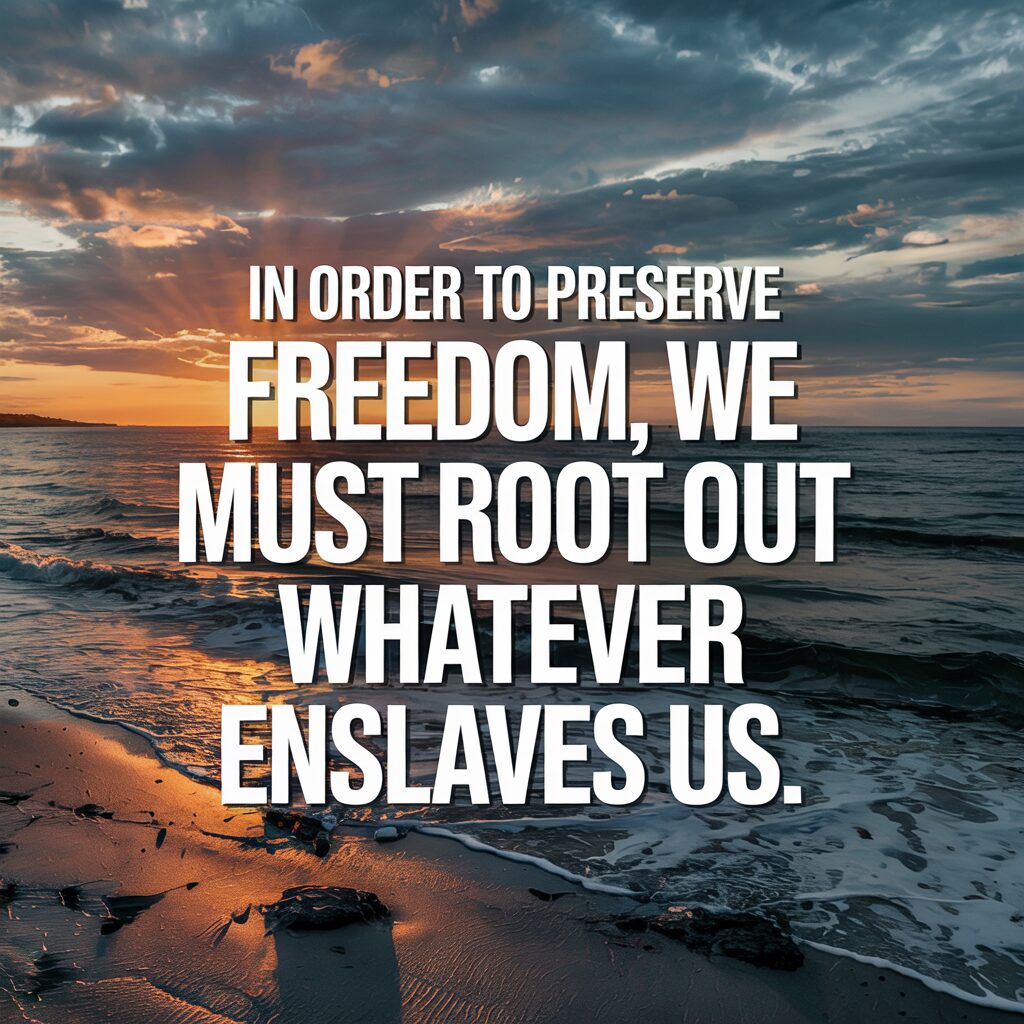
The final point that summarizes everything Paul told them over the course of two chapters is this: You cannot follow both. The two will always exist in perpetual conflict. Like Abraham, you must embrace one and drive out the other. As Todd Wilson says, “In order to preserve freedom, we must root out whatever enslaves us.” Here are a four takeaways to help you do that moving forward:
1. Less striving—more trusting.
Ishmael was born from human striving; Isaac from divine promise. One came through impatience, the other through faith.
Like Abraham and Sarah, you have a choice: Take matters into your own hands, or trust God’s timing.
➤ Reflect: Where am I relying on self-effort instead of surrender? What am I trying to control that I need to entrust to God?
2. Identify the Ishmaels in your life.
What parts of your spiritual life demonstrate fleshly pursuits that lead you into slavery rather than freedom? What makes a mockery of what scripture tells you and entices you into false truths?
Legalism, impatience, comparison, self-condemnation, spiritual pride—these are all modern Ishmaels, born from flesh, not faith.
➤ Challenge: Name one area this week where you trade performance for presence, or impatience for faithful waiting.
3. Drive them out.
Paul’s call to “drive out the slave woman and her son” is about decisively rejecting the things that lead us into slavery. This is a call to embrace one lineage and reject the other.
You can’t be born from two different mothers. You are either a child of the promise or a child of slavery. It can’t be both.
➤ Act: After identifying the things that enslave, do the work in the power of the Spirit to drive those things out of your life permanently.
4. Embrace your status as a child of the free woman.
In Christ, you’re not a servant trying to earn a place—you’re a son or daughter who already belongs.
You are an heir. You are free. You are chosen—not because of who you are, but because of who Christ is.
➤ Live it out: Walk in that confidence this week. Serve not for approval, but from identity. You are not under law. You are not born of slavery. You are a child of the promise, born of the Spirit.
And that is precisely what Paul gets into next… learning how to reject one and live by the other.
Let’s pray.
FAQs
FAQs
1. What is the main difference between being a child of the flesh and a child of the promise?
Answer: Being a child of the flesh refers to living under the law and striving for righteousness through human effort, whereas being a child of the promise means living by faith and receiving salvation through God’s grace. Ishmael, born of Hagar, represents the child of the flesh, while Isaac, born of Sarah, represents the child of the promise.
2. How does Paul use the story of Abraham and his two sons to illustrate this point?
Answer: Paul uses the story of Abraham and his two sons to illustrate the contrast between living under the law (Ishmael) and living by faith (Isaac). Ishmael was born naturally through human effort, while Isaac was born supernaturally through God’s promise. This story highlights that true children of Abraham are those who have faith, not those who rely on works.
3. What does the law represent in this context?
Answer: The law represents a covenant of slavery and bondage. It is a conditional, earthly covenant that requires both parties to uphold it, leading to spiritual slavery despite physical deliverance from Egypt. This is symbolized by Hagar and Mount Sinai, which represent the old covenant.
4. How does Jesus relate to this discussion about the law and faith?
Answer: Jesus redeemed us from the law’s curse by becoming a curse in our place. He liberates us into a life of Spirit-filled freedom, making us children of the free woman, Sarah, and heirs with full rights in Christ.
5. What are the implications of living under the law versus living by faith?
Answer: Living under the law leads to bondage and slavery, while living by faith leads to freedom and sonship. The law exposes sin but cannot save us from it; Christ liberates us into a life of Spirit-filled freedom.
6. How do the Galatian believers fit into this discussion?
Answer: The Galatian believers were being led astray by false teachers who were trying to control them with the law. Paul pleads with them not to abandon the freedom they have in Christ and to recognize that they are not children of a slave but of the free woman, Sarah.
7. What are some practical steps to live like a child of the promise?
Answer: To live like a child of the promise, one must stop striving and start trusting. This involves identifying areas where self-effort is being used instead of surrender and trading performance for presence. It also means standing firm in freedom and gently confronting those who would lead others into slavery.
8. How can we celebrate our status as children of the free woman?
Answer: We can celebrate our status as children of the free woman by walking in the confidence that we are heirs, free, and chosen not because of who we are but because of who Christ is. We should serve not for approval but from identity, living in that freedom and never reverting back to a lesser way of life.