
Highlight Reel
Sermon Summary
This study of Mark 1:29–39 presents Christ as moved by deep compassion, empowered by prayer, and focused on His divine calling. From private healing at Peter’s home to ministering to crowds, Jesus embodies kingdom kindness that meets personal needs without losing sight of the greater gospel mission. The passage invites us to bring Jesus into daily life, be rooted in prayer, and proclaim repentance and faith as the heart of our calling.
Sermon Audio
Shareable Quote graphics

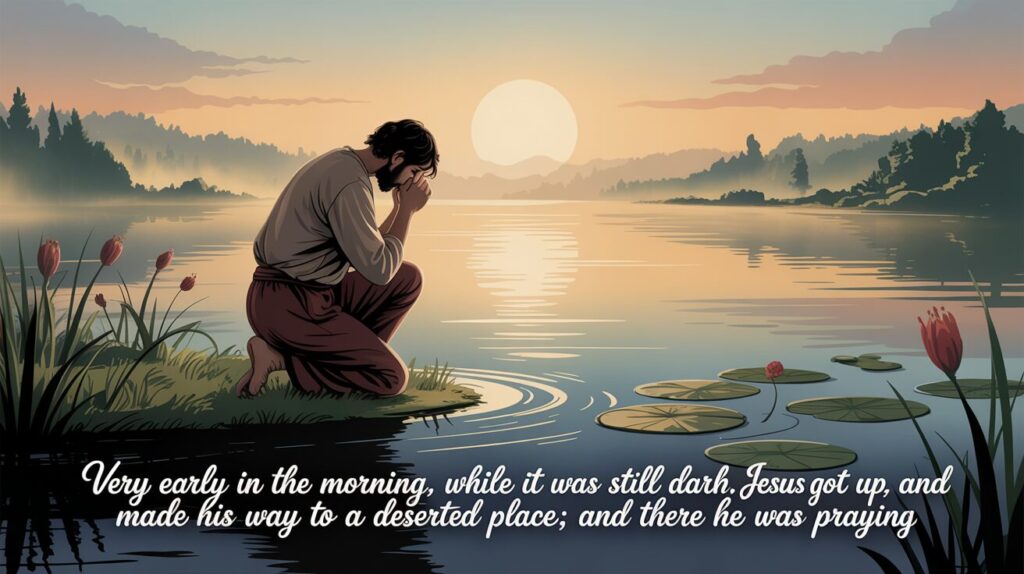
The Compassionate Christ
Nate Roten / Mark / Mark 1:29–39
Main Idea
Jesus was moved by compassion, empowered by prayer, and clear on His calling.
Picture a hospital emergency room—late at night, overwhelmed with patients. The trauma bays are full, machines are beeping, and nurses are racing from one crisis to the next. In the middle of it all, the attending physician is working non-stop—managing cases, giving orders, reading scans. Everything is urgent. Every second counts.
And then, in the chaos, a nurse steps in and quietly says,
“Doctor… there’s a woman in the waiting room. She’s not on the list—but she’s scared.”
The doctor looks around. There are dozens of patients still to be seen with real, pressing needs. But something about that request moves him. So, he steps away from the chaos of the ER, walks into the waiting room, and sits down next to a woman who’s been quietly suffering. No crowd. No fanfare. Just one person, seen and cared for.
This doctor has the capacity and training to care for the crowd and the individual, and this concept lies at the heart of today’s passage.
Passage
Mark 1:29–39 CSB
29 As soon as they left the synagogue, they went into Simon and Andrew’s house with James and John. 30 Simon’s mother-in-law was lying in bed with a fever, and they told him about her at once. 31 So he went to her, took her by the hand, and raised her up. The fever left her, and she began to serve them.
32 When evening came, after the sun had set, they brought to him all those who were sick and demon-possessed. 33 The whole town was assembled at the door, 34 and he healed many who were sick with various diseases and drove out many demons. And he would not permit the demons to speak, because they knew him.
35 Very early in the morning, while it was still dark, he got up, went out, and made his way to a deserted place; and there he was praying. 36 Simon and his companions searched for him, 37 and when they found him they said, “Everyone is looking for you.”
38 And he said to them, “Let’s go on to the neighboring villages so that I may preach there too. This is why I have come.”
39 He went into all of Galilee, preaching in their synagogues and driving out demons.
I – Compassion for the Individual
According to the text, Jesus and His four new disciples left the synagogue and went straight to Simon and Andrew’s house, where they would have the Sabbath dinner. Warren Wiersbe immediately draws an application from this first sentence that I believe we all need to hear from time to time.
That is a good example for us to follow: don’t leave Jesus at the church—take Him home with you and let Him share your blessings and your burdens.
It would be assumed that Peter’s wife and mother-in-law would be the ones preparing the meal, but we find that his mother-in-law is in bed sick with a fever. It’s worth noting that this is a subtle instance where Jesus heals on the Sabbath. We know this because Mark points out that the crowd who comes later arrived after sunset, which is after the Sabbath (since they follow a lunar calendar), so they would not violate Sabbath laws by bringing the sick to Jesus. Later, he will do so publicly, much to the frustration of the Pharisees and scribes, but even now in a private home, Jesus shows that He is Lord of the Sabbath.
First healing in Mark’s gospel. This is the first recorded instance of Jesus healing sickness in Mark’s account. We’ve seen His authority in calling the first disciples, in His teaching, and in His exorcism. Now, we witness His authority over sickness and disease. Jesus will perform these healings many more times throughout the gospel, but it’s important to understand how this first act is introduced. As with the demon-possessed man in the synagogue, the initial miracle of healing happens with a single individual—one-on-one. The crowds will gather later, but for now, Jesus shows compassion for the one. What should we take away from this? I believe there are three lessons:
1. Jesus cares for each individual. While He is building a kingdom of citizens, He doesn’t lose sight of the individual in the crowd. He sees every one of His people and cares for them personally. This idea is repeated throughout scripture, such as the shepherd leaving the 99 for the one. This emphasizes Jesus’ relational nature and the reality of an intimate gospel.
2. Secondly, we see how deeply Jesus cares. This was likely the first time Jesus met Peter’s mother-in-law. She wasn’t critically ill or suffering from an incurable disease; she just had a fever. Yet, all Jesus needed to do was take her hand and lift her up, and she was completely healed! Nothing in your life is too great or small for His attention and care. He loves you that deeply.
3. Lastly, we observe Jesus’ authority over nature. It is one thing to have authority in teaching scripture and to cast out an intelligent, unclean, spiritual being. It is quite another to command unintelligible aspects of the natural world. He can calm storms and rebuke sickness… chaotic effects of the fall on the natural order. Even in this realm, Jesus demonstrates complete authority! These points are the character of Christ revealed in the text.
The woman’s reaction to being served by Christ is to serve Christ. But what should a person’s response be when they experience the compassion and servant-hearted acts of the Messiah? If it’s true that Jesus did not come to be served but to serve… and if it’s also true that our lives should follow a path to become more Christ-like, then we should respond as Peter’s mother-in-law did—by serving! Once healed, she immediately began to serve them. I have been blessed, now I will bless… what a beautiful example of Christian character!
Jesus didn’t just teach truth about the kingdom publicly—He brought kingdom compassion into the private corners of everyday life. His first healing wasn’t for a dignitary or a crowd; it was for a quiet woman in a quiet home with a simple fever. And yet, He saw her. He came to her. He took her by the hand and lifted her up. This is who Jesus is. He’s not distant from your pain, too busy for your burdens, or waiting for something more significant before He gets involved. He draws near to the overlooked and acts with gentle power. He is our compassionate Christ.
Some of you may feel invisible or like your pain is too small for God’s attention—but this moment reminds us: Jesus is present in the ordinary. He enters our daily routines, notices our needs, and reaches out with compassionate authority. And when He does, the only fitting response is the one we see in Peter’s mother-in-law: immediate, grateful service, which no doubt was also an act of worship.
Challenge. Has He lifted you up? If He has strengthened you, then use your strength to serve from a grateful heart. When you leave here today, don’t leave Jesus at church—bring Him into your home, into your pain, and into your Monday mornings and Wednesday evenings. Let His compassion move you… and then move through you.
II – Compassion for the Masses
As mentioned earlier, once the sun set and the Sabbath day was over, the entire region, who were notified by the attendees at the synagogue, brought their sick and demon-possessed to Jesus. Somehow, they found out where He had gone and flooded Peter’s front yard with the sick and oppressed.
What was done for the individual was done for everyone. This again highlights the order and progression. What Jesus accomplishes on a small scale for one person, He will do on a larger scale for an entire community… in this case, the people of Israel. We’ve seen individual cases of healing from sickness and freedom from demonic oppression. Now, those same issues are addressed within the broader covenant family. That evening, no one was left untouched by the Messiah. Jesus’ compassion has shifted from the individual to the broader community. This also marks one of the first displays of His Messianic authority on a large scale, which likely would expand His ministry further and fuel the growing opposition from the Pharisees.
Healing is for all who are sick and diseased. This is a small distinction, but worth noting. Sickness and demonic activity both result from the fall, but they are not always connected. Not all sickness stems from demonic oppression, and not all demonic activity shows up as sickness. These are two separate issues that demonstrate Jesus’ authority over two different realms: the natural order and the spiritual powers. He is Lord over all and brings the power of His kingdom to everyone who comes to Him!
Demonstrates authority over all the demons. Mark elaborates on this a bit, so we should take the time to understand why. He tells us that Jesus would not allow them to speak because they knew who He really was. There are many theories that try to explain why Jesus conceals His identity for a time and even goes so far as to ask those whom He heals not to discuss it. These ideas range from maintaining an intimate setting to teach His disciples in the early months to controlling the timing of the Pharisees’ outrage that would ultimately lead to His crucifixion toward the end of His life. I’m inclined to say that if Jesus has all authority, then it’s His prerogative to decide the time, place, and manner in which He declares Himself as the Messiah. He would demonstrate it for now, and eventually, He will declare it Himself when He’s ready, not through unclean spirits who oppose His mission… and He has full authority to silence them.
The compassion of Jesus extends beyond our front door—it spills into neighborhoods, families, churches, and cities. He isn’t just Lord over your story, but over every broken life. Do you believe that? When Jesus restores you, it’s never meant to end with you. The impact of your healing, your freedom, and your redemption is meant to overflow into the lives of those around you.
So, ask yourself: Who in my community needs to encounter the compassion of Christ through me?
III – Jesus’ Prayer Time
We don’t have many details about how many people were involved or how long it lasted, but you can imagine that Jesus stayed busy late into the early morning hours. And even though He must have been completely exhausted and sleep-deprived, His late-night activities didn’t prevent His early morning prayer time. That’s a lesson we can all learn and adopt.
Jesus in the wilderness to pray. We are told that, while it was still dark and early, Jesus withdrew to the wilderness to pray. Mark’s use of the word wilderness is purposeful. Remember, the wilderness symbolizes longing and refinement. Jesus yearned for time with His Heavenly Father, and His time of trial was far from over. I don’t think Jesus ever forgot the temptation experience (after His baptism) that empowered Him. Jesus constantly modeled how to abide. In John 15, Jesus could instruct us to abide in Him to remain fruitful because, in His humanity, He experienced the same with the Father and the Spirit. This was both for His filling and as a defense against further temptation.
Prayer as Jesus’ Defense Against Temptation. Throughout Mark’s gospel, Jesus withdraws to pray at three key moments of temptation. The first is here, after an exhausting night of healing, when the crowds could have easily crowned Him a celebrity miracle worker. The second is in Mark 6:46, after feeding the 5,000, when He could have leaned into the applause of a provider-king. The third is in Gethsemane (Mark 14:32–42), just before the cross, when He wrestles with the cost of redemption. In every case, Jesus retreats—not to escape the pressure, but to align Himself with the Father. Prayer was His lifeline. It was how He stayed grounded, how He resisted distraction, and how He remained faithful to His mission.
Intimacy with the Father was Jesus’ top priority, not a luxury to be squeezed into a busy schedule if time allowed. If the sinless Son of God needed that kind of communion, how much more do we? Prayer wasn’t just a habit—it was His defense, His power, and His anchor amid relentless pressure.
So, ask yourself: Is prayer your preparation or your afterthought? If you want to walk in the power of Jesus, you must also walk in the pattern of Jesus—pulling away from the noise to be with the Father. You won’t accidentally drift into a life of prayer. It’s a choice and a discipline.
IV – Jesus Core Mission
Before Jesus could return to the house, more people from the area came back the next morning. In fact, Peter and the others found Jesus out in the wilderness to tell Him that everyone was searching for Him. This leads to an interesting twist.
Jesus departed. No doubt, this was an exciting time. Jesus had just launched His ministry and called four men to be His disciples. In the span of just a few hours, they had witnessed powerful, authoritative teaching, an exorcism, a private healing of someone they loved, and then healing and deliverance for probably hundreds. Now, more people were coming! The publicity was incredible! Yet, when they could have achieved so much more, Jesus took them and left the people on Peter’s front porch, unhealed. Why? Why would Jesus do this? Haven’t we heard before that Jesus never failed to heal people who came to Him for restoration? But here we are, with likely hundreds of people who were not healed.
Clarity of Mission. The simple answer is that Jesus had a different mission. But let’s go a bit deeper. Let’s examine some wisdom God gave to Samuel while choosing King Saul’s replacement:
1 Samuel 16:7 CSB
7 But the Lord said to Samuel, “Do not look at his appearance or his stature because I have rejected him. Humans do not see what the Lord sees, for humans see what is visible, but the Lord sees the heart.”
I believe Jesus saw their hearts and realized they were coming back for the wonder, not the word. Motives matter. If you come to Christ just to see miracles without recognizing your need for a relationship with Him, you have the wrong motive. Jesus was clear about His mission in verse 15, when He said, “The time is fulfilled, and the kingdom of God has come near. Repent and believe the good news!” Now, verse 38 reinforces that mission statement: “Let’s go on to the neighboring villages so that I may preach there too. This is why I have come.”
While miracles and healings demonstrate His authority and the coming of God’s kingdom, they are simply signs that direct people to His greater work and mission —transforming lives through the preaching of the good news. The gospel is the power of salvation and must be preached, heard, and received by faith. The miracle of physical healing is powerful, but the most amazing miracle of all is the resurrection of a dead soul to new life.
As a final point, we should pay close attention whenever Jesus says something like, “I have come to…”—because in those moments, He reveals His mission in His own words. In Mark 1:38, Jesus declares, “I have come to preach,” and based on verses 14–15, what He came to proclaim is clear: the time is fulfilled, the kingdom of God has drawn near, and we are called to repent and believe the good news.
🔥 Application Points:
So, what could be our main takeaway from today’s passage? I believe it is a call to be Christ-like in a very specific way.
Keep your focus on the Mission.
Jesus was moved by compassion, empowered by prayer, and clear on His calling—are you? Are you focused on the mission God has given you?
Make intimacy with the Father your priority, serve others with His compassion, and proclaim the gospel with your life.
➤ Challenge: Will you follow in the pattern of Jesus—not just in belief, but in rhythm, purpose, and mission?
FAQs
1. Why did Jesus heal Peter’s mother-in-law first, and what does that teach us about His compassion?
Jesus began His public healing ministry by caring for a single individual, Peter’s mother-in-law, who had a fever. This healing happened in a private home after leaving the synagogue, showing Jesus’ compassion even in the ordinary, personal moments of life. It highlights that Jesus cares deeply for each person, not just the crowds. His taking her by the hand and lifting her up also demonstrates His authority over sickness and nature, as well as His relational and intimate care for people. The woman’s immediate response to serve after healing illustrates that those touched by Christ’s compassion should respond with grateful service.
2. What is the significance of Jesus healing after the Sabbath in Mark’s Gospel?
The healed woman was sick on the Sabbath, but the larger crowd came after sunset, when the Sabbath had ended, respecting the Jewish law. Jesus healing Peter’s mother-in-law in a private home on the Sabbath shows His Lordship over the Sabbath, using mercy above strict ritual. It foreshadows later controversies where Jesus heals publicly on the Sabbath, asserting that mercy and compassion fulfill the law, not rigid legalism.
3. Why did Jesus not allow demons to speak and reveal who He was?
Jesus silenced the demons because, although they recognized Him as the Messiah, He controlled the timing and manner of His Messianic revelation. He did not want unclean spirits to declare His identity prematurely, which could have stirred misunderstanding or interfered with His mission plan. This reveals that Jesus exercises sovereign authority over spiritual powers and carefully guides the unfolding of His ministry.
4. How does Jesus’ compassion extend from individuals to the broader community?
After healing the one woman, crowds from the surrounding region brought many sick and demon-possessed to Jesus, highlighting that His compassion is not limited to individuals but extends corporately to entire communities. This demonstrates the abundant and overflowing power of the kingdom of God to heal and restore all who come. It also shows Jesus’ authority over sickness and demonic forces on every level.
5. Why did Jesus leave the crowd and go pray early in the morning?
Despite a long night of healing many people, Jesus withdrew to a deserted place early to pray. This shows His dependence on intimate communion with the Father as essential to His mission. Prayer was His lifeline, power source, and defense against temptation, demonstrating that spiritual strength and clarity come through consistent, prioritized prayer.
6. Why did Jesus leave the crowds to go preach in other villages rather than stay and heal more?
Jesus was clear about His core mission: preaching the good news of the kingdom of God and calling people to repentance and faith. While miracles verified His authority, He refused to let the crowd’s desire for wonders detract from proclaiming the gospel. Healing without genuine relationship and repentance would not fulfill His purpose. Thus, Jesus prioritized the Word over signs, sending His disciples to proclaim the Gospel beyond the immediate crowds.
7. What lessons should believers learn about prayer from Jesus’ example?
Jesus’ example teaches that prayer is not optional or secondary but absolutely vital for abiding in God and walking in the Spirit. Like Him, believers must make prayer a priority—even amid busy ministry—to resist temptation, gain strength, and remain aligned with God’s will. Prayer is described as a discipline and defense, reminding us that spiritual vitality depends on communion with the Father.
8. How can Christians today imitate the compassionate and mission-focused pattern of Jesus?
Believers are called to embody Jesus’ compassion by caring deeply for individuals in everyday life and extending that care to their communities. They are also to maintain intimacy with the Father through prayer and focus resolutely on the mission of proclaiming the gospel. The challenge is to follow Jesus not only in belief but in rhythm—compassion, prayer, and mission—reflecting His heart and purpose in daily living.