Highlight Reel
Sermon Summary
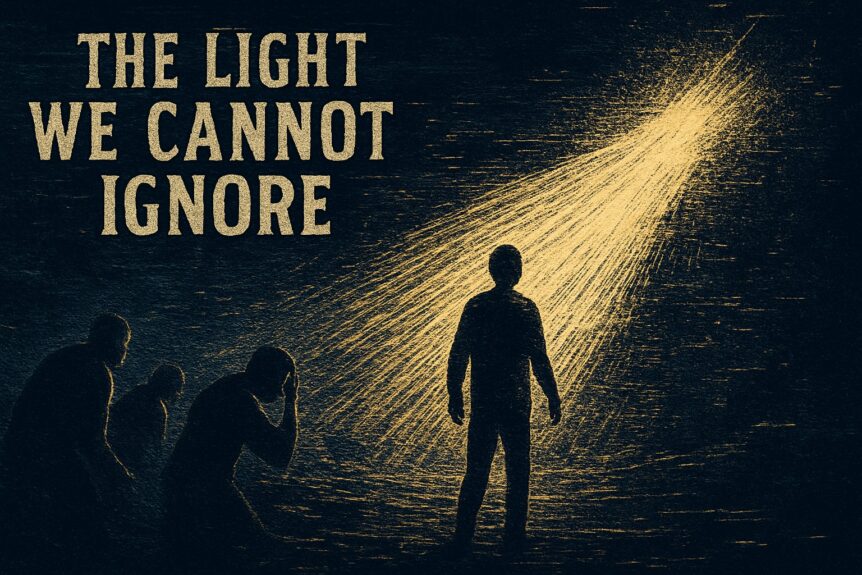
In “The Light We Cannot Ignore,” Pastor Nate Roten unveils Jesus as the inescapable Light from John 1 and 3 who reveals His eternal divinity, confronts our sin-shadowed hearts, exposes evil deeds, and demands a response—either repentant reception into God’s family or rebellious rejection. Like a midnight lamp jolting us awake, Christ’s incarnation pierces darkness we once called normal, offering mercy through exposure, calling us to recognize, repent, receive, and surrender to the Savior who changes everything this Christmas.
Sermon Audio
Shareable Quote graphics
Sermon Text
THE LIGHT WE CANNOT IGNORE
Nate Roten / Advent 2025 / John 1 & 3 / December 14, 2025
Main Idea: Jesus is the Light who reveals, confronts, exposes, restores, and demands a response.
Introduction: Some lights can’t be ignored
Do you prefer your room dark when you sleep? Some people like soft, dim lights that help them find the bathroom in the middle of the night, or maybe they just don’t like it completely pitch black. As for me? I love it entirely dark. The darker, the better. It’s soothing and comforting to me. I sleep much better in those conditions.
Now, let me ask you another question. Do you love it when someone comes into your bedroom at 3 am and flips on the light? Isn’t that the worst? There aren’t many things that can trigger me into instant anger, but that is one of them! I am anything but a morning person. While I’m sleeping, I want darkness, and if that is interrupted, I get angry and want the darkness back. Why? Because in that moment, I don’t want to wake up. I don’t want a conversation. I don’t even want coffee… not yet, at least. In that moment, all I want is to keep sleeping, and yet, when the light is flipped on, I can’t ignore it. It solicits a response from me.
Jesus is that kind of Light. When He shines His light on the human heart, it is unavoidable. It will evoke either a positive or negative response, but one thing a person cannot do is ignore it.
Series Intro: Darkness → Light
This is part 2 of our 4-part Advent series on Darkness and Light.
Sermon 1: The Darkness We Cannot Escape
Sermon 2: The Light We Cannot Ignore
Sermon 3: The Light We Cannot Hide
Sermon 4: The Light We Eagerly Await
Week one showed that we cannot escape the darkness on our own.
But this is where week two starts: people living in deep darkness don’t realize how dark it is—until Light comes.
You see, darkness seems normal until light breaks in, and once it does, light instantly reveals:
• what was hidden
• what was distorted
• what really exists
• how we operate in it
This is why Jesus cannot be ignored: His arrival exposes reality.
Think of a dark room… not one that you are sleeping in, but one you are operating in: you behave as if everything is normal… until someone switches on the lights. You might have acted based on assumptions from how your eyes have acclimated to the darkness, but now, with the light revealing everything, you’re compelled to reconsider what is truly real.
Therefore, as we continue to move toward the manger where the God of light pierced our dark world, it is important for us to understand what happens when that light shines. What does it do? What responses ought we to have? What does it mean for our lives once we see it?
That is what today is all about. Once we encounter the light, we can embrace it or reject it, but the one thing we cannot do is ignore it. So, let’s explore together what scripture says about what the Light reveals by looking at two chapters from John’s gospel (chapters 1 and 3).
I. The Light Revealed (John 1:1–5)
John 1:1–5 CSB
1 In the beginning was the Word, and the Word was with God, and the Word was God. 2 He was with God in the beginning. 3 All things were created through him, and apart from him not one thing was created that has been created. 4 In him was life, and that life was the light of men. 5 That light shines in the darkness, and yet the darkness did not overcome it.
The first point we cannot overlook here is the identity of the Light. Of course, John is describing Jesus of Nazareth as the Light, but he is very specific. He doesn’t allow Jesus to remain a simple rabbi, prophet, moral influencer, or religious figurehead.
A. Jesus is eternal (“In the beginning…”)
B. Jesus is divine (“and the Word was God”)
C. Jesus is Creator (“all things were made through Him”)
D. Jesus is life and light (“the life was the light of men”)
In other words, Jesus is not one light among many—He is the Light behind all lights.
Therefore, He cannot be ignored. When the Creator interacts with His creation, neutrality becomes impossible. The light of His identity compels everyone to make a decision about it.
II. The Light Incarnate (John 1:9–14)
John 1:9–14 CSB
9 The true light that gives light to everyone was coming into the world.
10 He was in the world, and the world was created through him, and yet the world did not recognize him. 11 He came to his own, and his own people did not receive him. 12 But to all who did receive him, he gave them the right to be children of God, to those who believe in his name, 13 who were born, not of natural descent, or of the will of the flesh, or of the will of man, but of God.
14 The Word became flesh and dwelt among us. We observed his glory, the glory as the one and only Son from the Father, full of grace and truth.
Reiteration. After mentioning John the Baptist, the author John repeats two points from the earlier verses.
a. The world was created through Him.
b. The light has come into His created world to give light to everyone.
This shows us that God is not distant from our broken state. He saw the darkness in our world and chose to act—not only to shine light from above into the darkness but also to step into it and illuminate the way out.
But He didn’t come only as the divine God of creation. Had He come in His full glory, everyone who encountered Him would have been struck dead by the holiness of His presence. In terms of redemption, He wouldn’t be able to serve as the holy, sacrificial Lamb of God slain on behalf of humans because He is not human. Therefore, to accomplish everything He had in His heart from the very beginning, He had to come as both.
The Incarnation. “The Word became flesh.” This profound statement reveals much about the nature of this light.
• Tabernacled. Took up residence. Just as God’s glory descended in the tabernacle in the wilderness to dwell with His people, so it does again in human flesh through Jesus Christ.
• Light wrapped in flesh. In this way, Jesus could be fully God and still be among His people without His holiness destroying them. They could see God and still live. He could walk with them, talk with them, eat a meal with them, carry their burdens, share in their pain, and celebrate their victories.
This demonstrates His great love for us. We cannot navigate the dark terrain to find Him. The reality of last week is that we didn’t want to… but even if we did, we couldn’t… unless He illuminated the way, and that is what He did. Christmas is the invasion of His guiding light into the darkness that dispels it, but also reveals who He is to His creatures. And once we have seen the light, we are at a crossroads of decision, which is what we see in the text.
The reaction. Every person faces one shared response in this passage: recognition or the lack thereof. As shown in the gospel of Mark, no one could miss Jesus. His power and fame spread everywhere. He couldn’t be ignored because of the message He delivered and the miracles He performed. Everyone saw the man in front of them, but in seeing with their physical eyes, they had to decide whether they truly recognized Him with their spiritual eyes—or as Mark asks, “did they really have eyes to see Him for who He is.”
• Rejection. Their failure to accept Jesus as God, Creator, and Messiah would result in denying His claims. This is demonstrated by the active resistance and hardening of the Pharisees.
• Reception. The only other option available is to receive His message and claims. For those who received Him as God and Lord, there is full adoption into His family: “To all who received Him… He gave the right to become children of God.”
So, what happens when the Creator enters His creation?
• He reveals God fully.
• He offers His companionship and nearness
• He offers spiritual life and adoption into God’s family.
• He demands a choice.
When you see Him, you either recognize Him as your Saving Light or not. In that recognition, you then either reject Him or receive Him — but you cannot ignore Him.
As CS Lewis wrote in Mere Christianity:
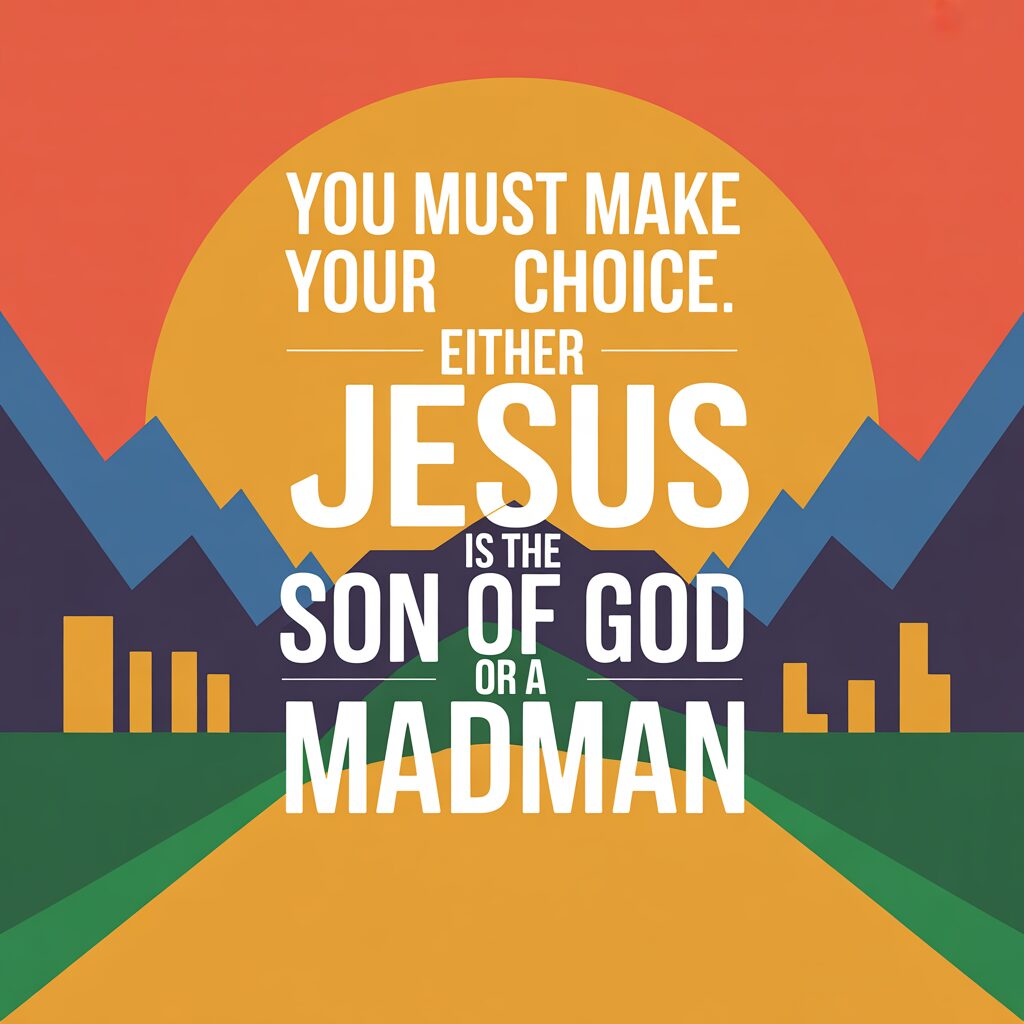
“I am trying here to prevent anyone saying the really foolish thing that people often say about Him: “I’m ready to accept Jesus as a great moral teacher, but I don’t accept His claim to be God.” That is the one thing we must not say. A man who was merely a man and said the sort of things Jesus said would not be a great moral teacher. He would either be a lunatic-on a level with the man who says he is a poached egg-or else he would be the Devil of Hell. You must make your choice. Either this man was, and is, the Son of God: or else a madman or something worse. You can shut Him up for a fool, you can spit at Him and kill Him as a demon; or you can fall at His feet and call Him Lord and God. But let us not come with any patronising nonsense about His being a great human teacher. He has not left that open to us. He did not intend to.”
We must decide. We can accept or reject, but we can’t ignore the light of Jesus’s identity. Now, we will explore what His light does to us.
III. The Light That Confronts (John 3:17–21)
We all know and love John 3:16. It is the most quoted verse of the New Testament, and probably the entire Bible. We cherish it because it shows how much God loves us, but how many of us know the verses that come right after?
They are equally glorious for those of us who have received the light and not rejected it, but are bitter pills for the latter because the love of God is described as a light that confronts the darkness in our hearts.
John 3:17–21 CSB
17 For God did not send his Son into the world to condemn the world, but to save the world through him. 18 Anyone who believes in him is not condemned, but anyone who does not believe is already condemned, because he has not believed in the name of the one and only Son of God. 19 This is the judgment: The light has come into the world, and people loved darkness rather than the light because their deeds were evil. 20 For everyone who does evil hates the light and avoids it, so that his deeds may not be exposed. 21 But anyone who lives by the truth comes to the light, so that his works may be shown to be accomplished by God.”
Light confronts our current fallen condition. After the well-known verse about God’s love, John presents our relationship with the light in courtroom terms. The Judge came to save, not condemn, but was the free gift of pardon received or not received? Those who believe and accept are not condemned. The blood of the God who died for them has been applied as payment for their transgressions. However, those who do not accept and believe are already condemned. This language is interesting. Why “already”? Because they were born in darkness and have chosen to stay there. From birth, we are all condemned because we all sin, and God’s wrath remains on us. There was a way to be pardoned, but they did not believe that Jesus is who He claims to be, so they remain condemned.
Light reveals our actions. As we discussed last week, we are all in darkness because of our sin nature. The fall impacted all our faculties, leading us to indulge in rebellious behaviors. The sin within us influences our thoughts, choices, and actions. Therefore, while Jesus comes as the Light that reveals who He is, He also exposes the darkness in our hearts and deeds.
In this passage, the light that comes into the world illuminates the reality of judgment on those who reject him, exposing:
• their love of the darkness
• the evil nature of their deeds
• their hatred of the light
• their active avoidance of the light
• their desire to conceal their works
The very fact that they retreat into dark corners when the Light shines is a judgment against them. Their retreat reveals their hatred of God and their delight in darkness.
Not quite as warm as verse 16, is it?
Yet, how utterly essential is it for us to understand what the Light is truly doing? It has eternal consequences! When the spotlight shines on our sad spiritual condition, we can either embrace it in repentance or retreat into the shadows in rebellion… but the one thing we can’t do is ignore it.
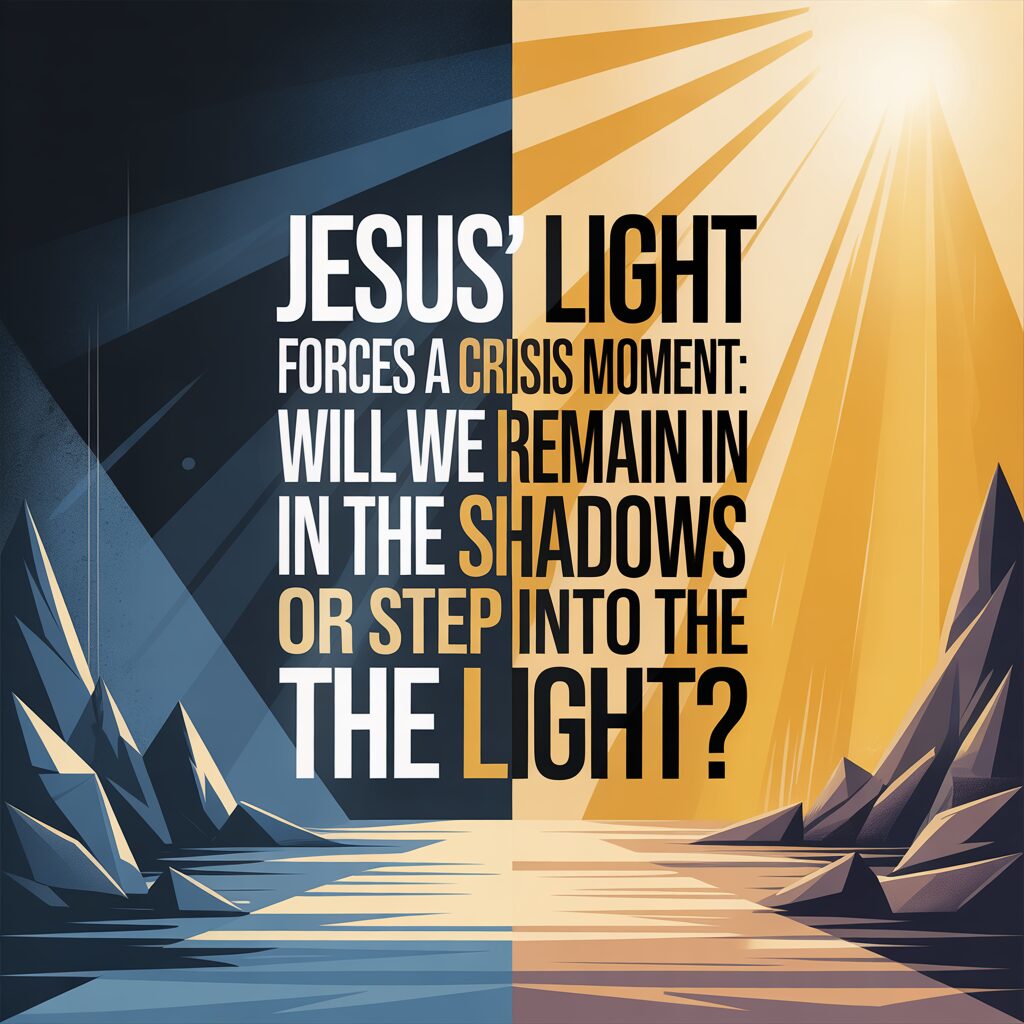
Jesus’ Light forces a crisis moment: Will we remain in the shadows or step into the Light?
And this exposure is not cruelty—it is mercy. Only the Light can reveal what is killing and condemning us. In that moment of exposure, the Light will make us uncomfortable before it makes us whole.
When you look at it this way, humanity isn’t really divided between the religious and the irreligious, but between those who repentantly receive the Light and those who rebelliously reject Him, but again, you can’t ignore Him.
Why?
Because:
• His identity is undeniable.
• His presence is unavoidable.
• His claims are inescapable.
• His impact is irreversible.
• His light reaches every corner of creation.
• His gift is eternal life to those who receive Him for who He really is.
His Light:
• Confronts sinful deeds.
• Exposes sinful motivations.
• Illuminates the way out of darkness
• Calls for a response.
• Dismantles neutrality.
• Offers spiritual life, but only to those who are willing to leave the darkness behind.
And when His light shines directly on you, a decision must be made, because everyone responds to Jesus— the only question is: how?
IV. Application: Step into the Light
How do we respond to Light we cannot ignore?
• Recognize. See Jesus for who He is… not just a good teacher or a moral person, but as God incarnate and the Sacrificial Lamb slain for your sins.
• Repent. Leave the shadows. Stop hiding. Turn from sin to the Light of Christ.
• Receive. Believe in your heart and acknowledge with your mouth that Jesus is Lord. Embrace the pardon from sin and the gift of a new life in Jesus.
• Surrender. Make the daily decision to reject sin and walk by His light.
Conclusion
He came not just to shine on us… but through the ministry of the Spirit, to shine:
• in us – dispelling the inner darkness
• through us – so that we may be used by Him to reach others in darkness.
• for us – So that we might know Him better.
When Light enters the world, nothing stays the same.
Christmas changes everything.
FAQs
1. What is the main idea of the sermon?
Jesus is the Light who reveals, confronts, exposes, restores, and demands a response from every heart He touches. This Light pierces our darkness like a sudden switch in a pitch-black room, forcing us to see reality and choose.
2. Who is Jesus according to John 1:1–5, and why can’t we treat Him as just a teacher?
Jesus is eternal (“In the beginning”), divine (“the Word was God”), Creator (“all things were made through Him”), and the source of life and light (“the life was the light of men”). As C.S. Lewis echoes in the sermon, we cannot patronize Him as a mere moral teacher—He is God incarnate, demanding we recognize Him as Lord or reject Him as lunatic or liar, with no middle ground.
3. What does the Incarnation mean in John 1:9–14, and why did Jesus come this way?
The “Word became flesh” and “tabernacled” among us, wrapping divine light in human form so God could dwell with sinners without His holiness destroying them. He entered His creation to reveal God fully, offer companionship, spiritual adoption as children of God, and force a choice—reception leads to new birth “not of natural descent… but of God”; rejection leaves us in darkness.
4. How does the light confront us in John 3:17–21?
God’s love sends Jesus not to condemn but to save, yet unbelief leaves us already condemned because we love darkness and evil deeds. The Light exposes our hatred of truth, desire to hide sin, and retreat from exposure—yet for believers, it reveals works “accomplished by God,” turning discomfort into mercy that awakens longing and illuminates escape from sin.
5. What are the two main reactions to Jesus’ light in the sermon?
Rejection: The world and His own people did not recognize or receive Him, hardening like the Pharisees, loving shadows to conceal evil.
Reception: Those who believe receive the right to become children of God, stepping from condemnation to pardon through His blood, with no neutrality possible—His identity, presence, claims, and impact demand decision.
6. Why is Jesus’ light impossible to ignore?
Darkness feels normal until light invades, revealing the hidden, distorted, and real—like flipping a switch in a room you’re fumbling through. Jesus’ undeniable identity, unavoidable presence, inescapable claims, irreversible impact, and reach into every corner dismantle neutrality, confronting deeds, exposing motivations, and offering eternal life only to those who leave shadows behind.
7. What are the four steps to respond to this Light in the application?
– Recognize: Jesus as God incarnate and Sacrificial Lamb for your sins.
– Repent: Leave shadows, stop hiding, turn from sin to Christ.
– Receive: Believe in your heart and confess with your mouth that Jesus is Lord, embracing pardon and new life.
– Surrender: Daily reject sin and walk in His light.
8. How does this sermon connect to Advent and the series on darkness and light?
In Advent, Christmas marks the Creator’s invasion of our inescapable darkness, where Light reveals unseen perils and the way out. It shines in us to dispel inner dark, through us to reach others, and for us to know Him—changing everything, as we cannot hide it or eagerly await it without response.