Sermon Summary
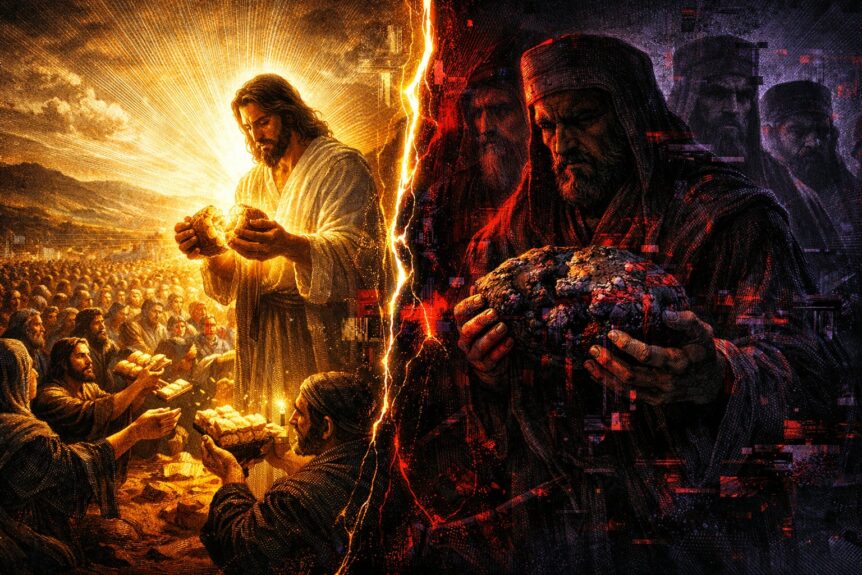
Jordan Newman takes a deep dive into Mark 8:1-21 when Jesus miraculously feeds 4,000 people and the Pharisees still have no faith in Him.
Sermon Audio
Sermon Text
The Bread of Life and the Leaven of Rebellion
Jordan Newman/ Mark / Mark 8:1-21 / March 29, 2026
The Bread of Life and the Leaven of Rebellion
Passage Mark 8:1-21
In those days there was again a large crowd, and they had nothing to eat. He called the disciples and
said to them, 2 “I have compassion on the crowd, because they’ve already stayed with me three
days and have nothing to eat. 3 If I send them home hungry, they will collapse on the way, and
some of them have come a long distance.”
4 His disciples answered him, “Where can anyone get enough bread here in this desolate place to
feed these people?”
5 “How many loaves do you have?” he asked them.
“Seven,” they said. 6 He commanded the crowd to sit down on the ground. Taking the seven loaves,
he gave thanks, broke them, and gave them to his disciples to set before the people. So they served
them to the crowd. 7 They also had a few small fish, and after he had blessed them, he said these
were to be served as well. 8 They ate and were satisfied. Then they collected seven large baskets of
leftover pieces. 9 About four thousand were there. He dismissed them. 10 And he immediately got into
the boat with his disciples and went to the district of Dalmanutha.
11 The Pharisees came and began to argue with him, demanding of him a sign from heaven to
test him. 12 Sighing deeply in his spirit, he said, “Why does this generation demand a sign? Truly I
tell you, no sign will be given to this generation.” 13 Then he left them, got back into the boat, and
went to the other side.
14 The disciples had forgotten to take bread and had only one loaf with them in the boat. 15 Then he
gave them strict orders: “Watch out! Beware of the leaven [a] of the Pharisees and the leaven of
Herod.” 16 They were discussing among themselves that they did not have any bread. 17 Aware of this,
he said to them, “Why are you discussing the fact you have no bread? Don’t you understand or
comprehend? Do you have hardened hearts? 18 Do you have eyes and not see; do you have
ears and not hear? [b] And do you not remember? 19 When I broke the five loaves for the five
thousand, how many baskets full of leftovers did you collect?”
“Twelve,” they told him.
20 “When I broke the seven loaves for the four thousand, how many baskets full of pieces did
you collect?”
“Seven,” they said.
21 And he said to them, “Don’t you understand yet?
1-God’s provision in the wilderness vv.1-10
Because this is a passage that seems so similar to the feeding of the 5 thousand I want us to take
some time and pick up on some of the meaningful differences. One thing I think is really interesting
and goes a long way towards evidence of biblical accuracy is the fact that this is a lesser number than
two chapters ago. If you were crafting a fictitious narrative of Jesus’ life and ministry surely you would
say there were five thousand men two chapters ago we have to up the number to show forward
progression in his popularity. But no, this is numbered at a smaller crowed not only in Mark but also in
the corresponding account in the book of Matthew. Chapter 15:32-29
32 Jesus called his disciples and said, “I have compassion on the crowd, because they’ve already
stayed with me three days and have nothing to eat. I don’t want to send them away hungry,
otherwise they might collapse on the way.”
33 The disciples said to him, “Where could we get enough bread in this desolate place to feed such a
crowd?”
34 “How many loaves do you have?” Jesus asked them.
“Seven,” they said, “and a few small fish.”
35 After commanding the crowd to sit down on the ground, 36 he took the seven loaves and the fish,
gave thanks, broke them, and gave them to the disciples, and the disciples gave them to the
crowds. 37 They all ate and were satisfied. They collected the leftover pieces—seven large baskets
full. 38 Now there were four thousand men who had eaten, besides women and children. 39 After
dismissing the crowds, he got into the boat and went to the region of Magadan. [a]
Again, we see Jesus feeding a crowd but several things are different from the feeding of the five
thousand
Jesus’ Compassion was for their physical well-being vs the shepherdess sheep. As opposed to the 5
thousand Jesus new that they could not make the distance to the villages without food.
The crowd follows Jesus into the wilderness vs meets him there. This was mixed area in the
Decapolis meaning both Jews and gentiles were present. The feeding takes place after 3 days of
listening to Jesus’ teaching vs the first evening upon Jesus’ arrival
Jesus still provides for the gentiles and still teaches them further confirming the interaction with the
gentile woman from Sidon that we saw the other week. While Christ came first to the Jews we can
see that in his ministry the desire was for all of the nations to follow the Lord.
Ultimately the take away from this part of Mark is a reiteration of the provision we see provided in
chapter 6
Jesus blessed and miraculously provided
The disciples distributed
Abundance
And Satisfaction
2-The Leaven of the Pharisees vv. 11-15
This next part of the Chapter is where things really star to diverge from the feeding of the 5 thousand.
After the crowd is dismissed we are told that Jesus got in the boat with his disciples and heads down
the coast of the sea of Galilea. He ends up in the district of Dalmanutha in the area of Magadan or
sometimes also called Magdala. Magadan is a town on the north-west shore of the sea of Galilea. It is
here that he is met with a group of pharisees. We don’t know for certain where these pharisees are
from but Judging from the parallel passage in Matthew where is says that “The Pharisees and
Sadducees approached, and tested him” they might have come up from Jerusalem itself we know
other place in the Gospels they came out from Jerusalem to interrogate Jesus.
Matthew 16:1- 4
“The Pharisees and Sadducees approached, and tested him, asking him to show them a sign
from heaven. He replied, “When evening comes you say, ‘It will be good weather because the
sky is red.’ 3 And in the morning, ‘Today will be stormy because the sky is red and
threatening.’ You know how to read the appearance of the sky, but you can’t read the signs of
the times. An evil and adulterous generation demands a sign, but no sign will be given to it
except the sign of Jonah.” Then he left them and went away.”
What is Leaven?
This is a bit of an odd term to us. Leaven is yeast, and in our culture, yeast is great, whether it us
puffy flaky biscuits, soft fluffy bread or thick and crispy pizza dough the carbon dioxide generated by
yeast makes most of our bread desirable. However, leaven in Jewish culture had a different
connotation. While it was not unclean for Jews to it, and they did often eat leavened bread, it was
often used as a symbol of impurity. Unleavened bread was made with flour oil and water that’s is. It
was used in celebrations of the Passover and sat in temple as the bread of the presence, Yeast is an
organism, and much of God’s law was concerned with purity and holiness things being set apart like
with like. Additionally, a little yeast has can affect a whole batch of something whether bread, wine, or
beer. Jesus hear knows that a little sin in this area can affect so much of one’s life.
What then is the leaven of the Pharisees and Herod? We can look back before in the previous
chapters and look a what Jesus has been up to. I the last two chapters he has fed probably around
12000 people, cast out demons walked on water, and can’t go anywhere without being surrounded by
people who bring their sick for healing. That is not including the other 4000 men that he just fed
before the pharisees showed up. What had happened was that the hearts of the religious and political
leaders of Israel had become so hardened against the things of God that even with overwhelming
miraculous evidence they still don’t believe who Jesus says he is.
Do you have eyes and not see?
Later we see use a reference to scripture that appears in several places throughout Gods word.
Do you have eyes and not see; do you have ears and not hear. It is used a couple of times to refer to
Israel in their disobedience and their lack of understanding of what the Lord requires. in Jeremiah
5:21 “Hear this, you foolish and senseless people. They have eyes, but they don’t see. They have
ears, but they don’t hear.”
And again, to in the book of Ezekiel.
Ezekiel 12:2 “Son of man, you are living among a rebellious house. They have eyes to see but do not
see, and ears to hear but do not hear, for they are a rebellious house.”
Here again, God in the second person of the trinity, chastises his people for their disobedience and
unbelief. It is no coincidence that this section is sandwiched between two miracles of the healing
deaf/mute from last week and a blind man in the following verses.
The Sign of Jonah
The Pharisees and Harrod were not the only ones in disbelief. In Matthew 11:20-24 Jesus condemns
many of the town around Galilea
“Then he proceeded to denounce the towns where most of his miracles were done, because
they did not repent: “Woe to you, Chorazin! Woe to you, Bethsaida! For if the miracles that were done
in you had been done in Tyre and Sidon, they would have repented in sackcloth and ashes long ago.
But I tell you, it will be more tolerable for Tyre and Sidon on the day of judgment than for you. And
you, Capernaum, will you be exalted to heaven? No, you will go down to Hades. For if the miracles
that were done in you had been done in Sodom, it would have remained until today. But I tell you, it
will be more tolerable for the land of Sodom on the day of judgment than for you.”
Because of this here in Mark’s account he tells this generation that there will be no sign, Matthew
includes another part of the statement that Mark does not include and that is they will receive no sign
except the sign of Jonah. This is Jesus foreshadowing his death and resurrection, the only sign
powerful enough to be visible to them. Though we know for most of them it did not serve to convince
them to believe but only served to further harden their hearts.
3-The Lord Has Done Great Things for Them vv 16-21
Now we understand the disbelief and hardness of the hearts of the Pharisees we can see why Jesus
warns against their leaven to his disciples
The sad part of their situation is that they heard leaven and became immediately consumed with their
own current circumstances, remembering that they had only one loaf of bread. They not only missed
the point of Jesus’ warning but began to do the very thing that Jesus was warning them about. In their
worry they had completely forgotten that Jesus twice had taken a small amount of bread and fed
multitudes until they were satisfied and had leftovers.
They had forgotten that this person they were following had walked on water to rescue them from a
storm and given them the authority to heal and cast out demons. Jesus had even healed some of
their own family members. This all showed how much they needed Jesus to warn and remind them.
But, how quickly we too forget God’s promises and provision in our life. Last week in life groups one
of the questions was about have we ever felt God was distant. I remember us talking about the
remedies for those feelings. I know that emotions are God given but like all things they need to be
subjected to the truth so how we beware the leaven of the Pharisees and Harrod?
Application
Our Present Suffering
First we need to consider what Paul wrote to the romans in 8:18 “ For I consider that the sufferings of
this present time are not worth comparing with the glory that is going to be revealed to us.” Do not let
our present circumstances distract us from the truth of God’s goodness and provision in our lives
Testimony
Remind ourselves of the times in our own lives where God has sustained us in times of trial or even
brought about his will through the difficulties we faced. We remember that God’s ultimate will for
those of us who have been born again in Christ is that we will be conformed to the image of Jesus.
We need to also surround ourselves with the testimony of brothers and sisters in Christ who have
been blessed by God’s provision in their own lives. Share with one another what God is doing in your
lives and read and listen to the testimonies of God’s family members from the other times.
Hosanna
Finally, as we are meeting on Palm Sunday and we remember our Saviors triumphal entry into
Jerusalem we need to look to the crowd that met him there and called out to him. Hosanna is a plea
for salvation the crowd was calling out to Jesus “Save Us”. The king of all the universive gave his son
through which all things we created. He went willingly went to the cross to save you and me from the
hardness of our hearts and our sins that separated us from God. Constantly cry out for your salvation
plead with the Lord to continue his good work in you. The greatest testimony you have to look back is
your salvation. Jesus’ death on the cross and his resurrection three days later is that same sign of
Jonah that served to harden the hearts of the Pharisees heart, is your greatest hope. If you have not
repented of your sins and confessed that Jesus is Lord, which means you have submitted to and
followed him then don’t wait any more. Do not continue to let your heart be hardened in rejection and
unbelief repent now and be saved into your creator’s family. It is not an easy life but it is a good life
and it is the life you were made for.