Highlight Reel
Sermon Summary
In Mark 9:38–50, Jesus confronts two dangers: excluding true believers and tolerating personal sin. He calls His followers to embrace those who belong to Him while ruthlessly cutting off anything that leads to spiritual destruction.
Sermon Audio
Shareable Quote graphics

Sermon Text
Make No Peace with Evil
Nate Roten / Mark / Mark 9:38–50 / May 17, 2026
Main Idea
Jesus calls us to better embrace Christian fellowship while ruthlessly cutting away sinful influences.
Have you ever done something in your life only to have the gravity of the situation overwhelm you later?
In high school, my friend and I visited Elk River Falls, which is a towering waterfall with a dangerous feature. The rock face slopes outward as it descends, so you have to jump far enough to clear the rocks before hitting the water below. Like most teenagers, I felt invincible… and compelled to prove it. It took some time to talk myself into it. But when I did, the first jump was pure adrenaline.
The second nearly killed me. As I plunged into the water, I slammed into the submerged rocks. By God’s grace, the water was just deep enough to spare me serious injury, but as I climbed back up that cliff, the gravity of what could have happened overwhelmed me. I could have been paralyzed. I could have died. My sense of invincibility was shattered in an instant.
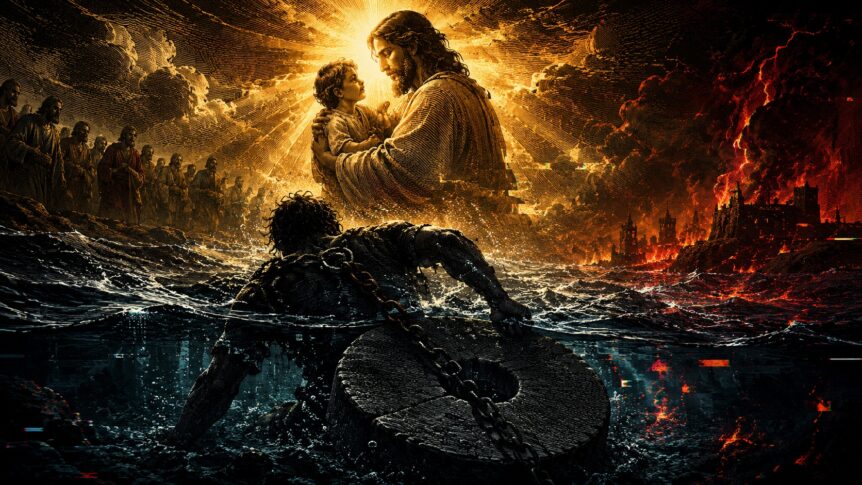
In today’s passage, Jesus issues a similar wake-up call to His disciples. Last week, we saw Jesus redefine greatness. True greatness means humble, servant-hearted living and welcoming even the lowest people on the social ladder… like children. But now, still holding that child in His arms, Jesus’s tone turns deadly serious. He’s about to explain the eternal gravity of two crucial mistakes: rejecting fellow believers and tolerating personal sin.
Passage
Mark 9:38–50 CSB
38 John said to him, “Teacher, we saw someone driving out demons in your name, and we tried to stop him because he wasn’t following us.” 39 “Don’t stop him,” said Jesus, “because there is no one who will perform a miracle in my name who can soon afterward speak evil of me. 40 For whoever is not against us is for us. 41 And whoever gives you a cup of water to drink in my name, because you belong to Christ—truly I tell you, he will never lose his reward. 42 “But whoever causes one of these little ones who believe in me to fall away—it would be better for him if a heavy millstone were hung around his neck and he were thrown into the sea. 43 “And if your hand causes you to fall away, cut it off. It is better for you to enter life maimed than to have two hands and go to hell, the unquenchable fire. 45 And if your foot causes you to fall away, cut it off. It is better for you to enter life lame than to have two feet and be thrown into hell. 47 And if your eye causes you to fall away, gouge it out. It is better for you to enter the kingdom of God with one eye than to have two eyes and be thrown into hell, 48 where their worm does not die, and the fire is not quenched. 49 For everyone will be salted with fire. 50 Salt is good, but if the salt should lose its flavor, how can you season it? Have salt among yourselves, and be at peace with one another.”
I – Embrace Fellow Believers (vv. 38-41)
Unwelcome – The irony is stunning. Literally moments after Jesus commands them to welcome the young in the faith, the outcast, and the ostracized… the ones like this little child… John confesses that they’ve been doing the opposite. “Teacher, we saw someone driving out demons in your name, and we tried to stop him because he wasn’t following us” (v. 38). Notice the word “we.” This wasn’t just John’s prejudice but a group decision to exclude a fellow believer. They admit that this person was acting in the name of Jesus, yet they couldn’t accept that someone outside their circle of twelve could do what they did. Therefore, their attitude runs counter to what Jesus is trying to teach them.
Following us – Even more revealing is John’s complaint: the man “wasn’t following us”… not Jesus, but us… meaning the twelve. This could mean one of a couple of things. Either John did not consider this follower a legitimate disciple of Jesus, or he was complaining that the man was not part of the inner group, one of their tribe. If the latter is the case, it reveals the heart of the problem. They weren’t concerned about doctrinal purity or protecting Jesus’s reputation. They were protecting their own status as the inner circle and continuing in the same attitude that Jesus had just corrected about who’s the greatest.
Reassurance – Jesus’s response is swift and clear: “Don’t stop him” (v. 39). His reasoning reveals a crucial principle: “No one who performs a miracle in my name can soon afterward speak evil of me. For whoever is not against us is for us” (vv. 39-40). Consider the divine logic here: if this man has genuine spiritual power to cast out demons in Jesus’s name, God Himself is empowering his ministry. The disciples’ real concern should be advancing Christ’s kingdom, not protecting their own exclusive club.
This echoes Paul’s heart in Philippians 1:17-18, where he rejoices that Christ is proclaimed, regardless of the messengers’ motives. This is an important character trait to understand. The focus is the expansion of the kingdom, not our own camp. The foundational question is: Are they for Jesus or against Him? If that is the main question, there’s no gray area. There is no room for neutrality, so let’s champion those who are for Jesus and stop thinking of ourselves more highly than we ought.
How often do we fall into the same trap? “We can’t partner with them, they’re Methodist. They’re too Charismatic. Their worship is too contemporary. They sprinkle new converts instead of dunking them.” Meanwhile, Jesus emphasizes that even giving a cup of cold water to another believer brings an eternal reward (v. 41). And here’s the painfully ironic twist: the disciples were criticizing someone for succeeding at what they had just failed to do. Remember? Nine of them couldn’t cast out the demon at the base of the mountain, yet here they are, trying to shut down someone who could!
Brothers and sisters, we must distinguish between essential gospel truths worth defending and secondary issues that often divide us. Yes, we hold firm to our reformed convictions and hold the line of orthodox belief. But let’s not mistake our theological preferences for gospel essentials. There are so many points of division in the church today, though Jesus’ primary concern is the unity of his body and the proclamation of the good news he brings. We need to stop needless bickering and the desire to draw the circle of acceptance so tight that only we can fit inside it. We need to care deeply about the unity of the body, even to the point of not overlooking the simplest gestures, like giving a cup of water to another believer.
II – Ruthless Removal of Evil (vv. 42-48)
If Jesus was gentle with the disciples’ exclusivity mindset, He became fierce when confronting sin and spiritual destruction. He unpacks this truth through two shocking illustrations, beginning with the very child still in His arms.
- The holiness of others – Picture a toddler taking those precious first steps toward daddy’s outstretched arms. Now imagine someone deliberately pushing that child down, sending them sprawling into the coffee table. Your blood boils, doesn’t it? That’s how Jesus feels about anyone who causes a young believer to stumble. Jesus’ very posture speaks volumes about His love and care for children in general, and for new believers who are just learning to walk in their faith. Jesus has this cherished child in His arms, and if you play a role in one like this falling away from the faith (meaning to apostatize or walk away), it would be far better if you were dead.
His language is deliberately shocking: “It would be better for him if a heavy millstone were hung around his neck and he were thrown into the sea” (v. 42). This isn’t hypothetical imagery. A millstone is a massive round stone, typically pulled by donkeys, used to grind grain. The Romans actually executed rebels this way. They would take a stone like this, hang it around the rebel’s neck, and throw the rebel into the sea or a body of water. This very well could have been something the disciples witnessed firsthand, with lifeless bodies swaying beneath the surface of shallow water or sinking to the depths, or they could have heard stories from other eyewitnesses.
The severity of this illustration lies in the impossibility of escaping such a fate. If you have a massive stone tied around you and you are cast into the ocean, there’s no possible way you can swim your way back to the surface. In this scenario, your fate is absolutely sealed. And Jesus says even that horrible fate is preferable to causing a believer to fall away from faith. Think about that. Physical death by drowning in the depths is better than being responsible for someone’s spiritual apostasy.
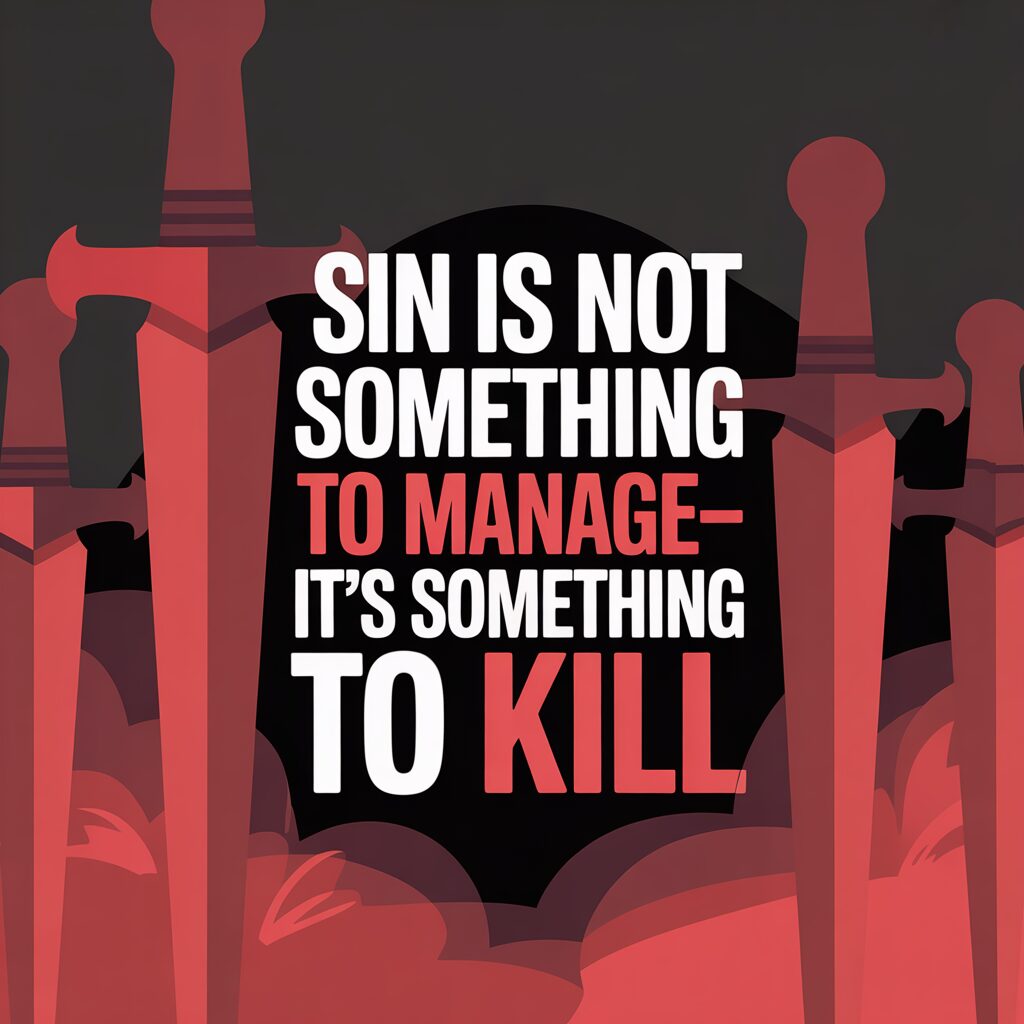
- Personal holiness- Then Jesus turns to personal holiness with equally shocking language: If your hand causes you to fall away, cut it off. If your foot causes you to fall away, cut it off. If your eye causes you to fall away, gouge it out (vv. 43, 45, 47). Before anyone reaches for a knife, understand that this is metaphorical… Jesus isn’t promoting self-harm… but the principle is deadly serious. Jesus is describing spiritual surgery. That hand that clicks on pornography, that foot that walks into compromising situations, that eye that lingers on what doesn’t belong to you… whatever feeds your sin must be cut away, no matter how valuable it seems. Think of it as spiritual gangrene. A surgeon doesn’t hesitate to amputate a gangrenous limb because he knows that keeping it will kill the entire body. Jesus is saying: treat sin with the same surgical urgency.
Hell – When Jesus speaks about hell in this passage, He uses the term Gehenna, which derives from the Hebrew phrase meaning “Valley of Hinnom.” This was a real place just outside Jerusalem with a horrific history. In the Old Testament, it was where some Israelites tragically sacrificed their children to the pagan god Molech (2 Chronicles 28:3; Jeremiah 7:31). Later, during King Josiah’s reforms, the valley was desecrated and eventually became associated with uncleanness and judgment. By the time of Jesus, it had become a refuse dump where garbage continually burned and decaying waste was consumed by worms.
Jesus then intensifies the warning by quoting Isaiah 66:24, describing hell as the place “where their worm does not die and the fire is not quenched.” The imagery is meant to be sobering. Since Mark’s audience is mostly Gentile, this explanation references Gehenna to help them picture the place of defilement, destruction, death, fire, and decay. He takes a known image of destruction and uses it to describe the terrifying reality of eternal judgment. The worm represents internal torment, while the unquenchable fire represents ongoing judgment that cannot be stopped or escaped. Jesus is not using exaggerated language to scare people emotionally; He is speaking truthfully about the eternal consequences of rejecting God and clinging to sin. The clearest point of the passage is this: sin is so deadly, and hell is so terrible, that it would be better to lose anything in this life than to remain under God’s eternal judgment and wrath.
That is why Jesus speaks so radically about cutting off the hand or plucking out the eye… the disciples must wage war against sin, not make peace with it. Like King David, we must say:
Psalm 101:3–4 CSB
3 I will not let anything worthless guide me. I hate the practice of transgression; it will not cling to me. 4 A devious heart will be far from me; I will not be involved with evil.
III – Salt and Fire (vv. 49-50)
Jesus concludes with puzzling imagery: “Everyone will be salted with fire.” We often associate salt with light because of Jesus’ teaching, but we rarely, if ever, associate salt with fire. That’s not a typical association in scripture or life. So what does it mean?
Two interpretations seem most likely:
1. Preserved judgment – Since Mark uses the word ‘for,’ he could be linking the fire and salt to the unquenchable fires of hell. And since salt is a preservative and hell is eternal, this pairing becomes an analogy for their eternal, conscious torment.
2. Preserved sanctification – Since Mark encourages believers to have salt among themselves, this can be seen as walking through the fiery trials of this life, which result in our purification (as opposed to the unbeliever’s condemnation). Thus, the Christian becomes a seasoning and preservative in a decaying, sinful world. This also aligns with one of the few references that pair salt and fire, both of which are present in Old Testament sacrifices (Lev. 2:13; Ezek. 43:24). This concept is lost on modern readers but would have been immediately recognizable to a first-century Jew who knew their scriptures well. Also, to take it one step further, Paul encourages all believers to be living sacrifices that are holy and pleasing to God (Romans 12), so all of this rich imagery mixes together into a portrait of a true disciple that is then encouraged by calling salt good and warning against losing the potency of your seasoning.
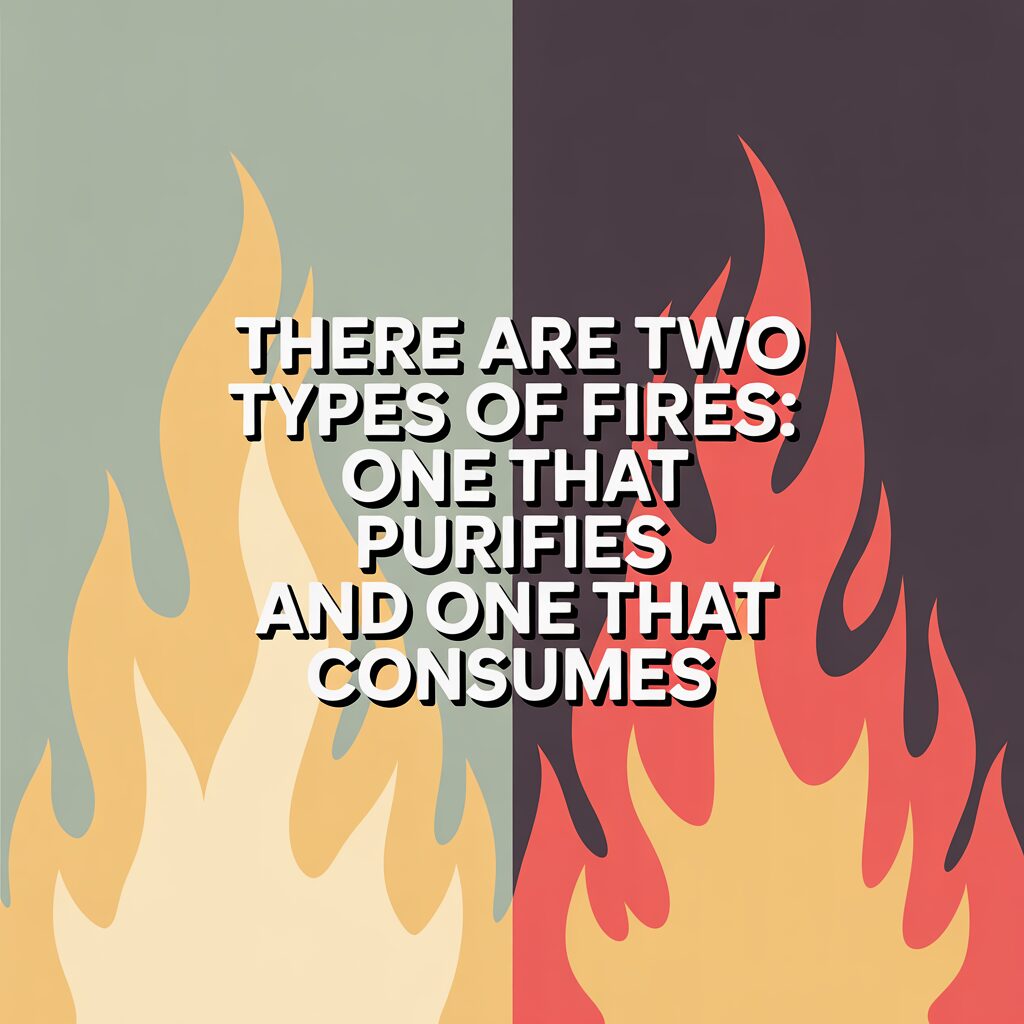
So, which is it, you might ask? To answer, let me ask another question. Is it possible that it’s both? The beauty is that both interpretations reinforce Jesus’s message: there are two paths: one leading to purifying trials that produce Christ-like character, the other to eternal judgment. Both are connected in the passage, and both are matters of urgency that the disciples need to hear and grasp.
🔥 Application: How then shall we live?
So how do we live out these twin truths? What Jesus describes here is a world where we have flipped everything upside down. We place too many restrictions on our Christian fellowship and allow too many sinful influences. Brothers and sisters, we have it all backward!
Jesus wants us to make peace with one another, regardless of the ‘tribes’ we have categorized ourselves into, and to make no peace with the evil that leads us to eternal condemnation!
So, here is your assignment for this week:
First, examine your fellowship filters. Where are you drawing lines that Jesus wouldn’t draw? Yes, we stand firm on gospel essentials—the authority of Scripture, salvation by grace alone, and the deity of Christ. But are you rejecting fellowship over worship styles, denominational labels, or secondary theological differences? Ask yourself: “Am I more concerned with advancing Christ’s kingdom or protecting my particular tribe?”
Second, perform spiritual surgery on your sin. What’s your “hand” that needs to be cut off? Which websites do you need to block? Which relationships do you need to end? Which sinful habits are slowly poisoning your soul and pulling you away from Christ?
The stakes couldn’t be higher. Hell is real. Temptation is deadly, and half-measures won’t work.
If you do these two things, you will be better equipped to be salt and light in your community. Every day, the lost are walking toward eternal judgment, while lukewarm Christians are losing their spiritual saltiness. The consequences of our actions, or inaction, are too weighty to ignore.
Like my trip to the waterfall, I pray you don’t leave here unchanged. The gravity of eternity demands faithful action.
FAQs
1. Does this mean doctrine doesn’t matter as long as someone names Jesus?
No. Jesus is not dismissing truth but correcting pride. The dividing line is allegiance to the real Christ of Scripture, not denominational alignment. Essential doctrines remain non-negotiable.
2. How do we know what counts as a “gospel essential”?
Core truths like the authority of Scripture, the deity of Christ, and salvation by grace alone define the gospel. Secondary issues matter, but they shouldn’t fracture fellowship with true believers.
3. Is Jesus actually telling us to harm ourselves to fight sin?
No. His language is intentionally extreme to communicate urgency. The point is decisive, costly action against sin—not literal self-harm.
4. What does it mean to “cause someone to stumble”?
It refers to leading another believer—especially a young or vulnerable one—into sin or away from faith. Jesus treats this as a deadly serious offense.
5. Why does Jesus speak so graphically about hell?
Because hell is real and eternal. He uses vivid imagery to awaken us to its seriousness, not to manipulate emotion but to tell the truth.
6. How can we fight sin without becoming legalistic?
By remembering that we fight from grace, not for it. We belong to Christ, and that identity fuels repentance, not self-righteousness.
7. What does “salt losing its flavor” mean for a Christian?
It describes a compromised life—one that no longer reflects Christ distinctly. A saltless disciple blends into the world instead of preserving and influencing it.
8. What does “salted with fire” mean?
It points to two realities: believers are refined through trials, while unbelievers face judgment. Everyone encounters fire—either as purification or punishment.