Highlight Reel
Sermon Summary
Drawing from 2 Timothy 2:1–2 and real-life ministry in Italy, this sermon exposes the consequences of withholding Scripture and distorting the gospel. Where the Word is absent or grace is treated as earned, spiritual growth stalls. But where believers are strengthened by grace and equipped with the Word, disciples multiply. Every Christian is a link in that chain, called to intentionally invest in others so the gospel continues forward.
Sermon Audio
Shareable Quote graphics
Sermon Text
Kingdom Growth: Disciples who Make Disciples
Nate Roten / High Impact Church Series / 2 Timothy 2:1-2 / June 28, 2026
Main Idea
God’s Word is entrusted to us so that it multiplies through us.
We must become the link that holds, not the link that breaks.
Passage
2 Timothy 2:1–2 CSB
You, therefore, my son, be strong in the grace that is in Christ Jesus. 2 What you have heard from me in the presence of many witnesses, commit to faithful men who will be able to teach others also.
Opening · The Girl Who Wouldn’t Stop Reading
While I was in Isola, Italy, I had the pleasure of working with a group of 13 kids, ages 10-12. We were there to teach ESL using Bible stories and to play games throughout the day. As I’m sure you are well aware, kids like games. They will choose games over lessons 100% of the time. But something fascinating happened that week. Part of the lesson was a memory verse… 1 John 2:2. At first, it took some convincing to get them to sit down and learn the English version, but very quickly, everyone was absorbed. Many of them did not want to play the next game. They just wanted to keep trying to memorize it. Their efforts took up nearly the entire 1-hour block, but one girl in particular stood out.
After everyone finally stood up and headed out to play, she sat alone. She’s not in trouble. She is not left out. She chose this. She was the only one who took all 60 minutes to sit and read the verse… and over… and over. Her actions said the game can wait. She has found something better.
I watched that all week, and I could hardly stand it. These thirteen kids soaked it up like dry ground in a summer rain. Do you know how rare that is in a ten-year-old? But it wasn’t only the spiritual hunger that affected me. It was the famine beneath it.
Most of those children had never been fed.
Where We’ve Been
For several weeks now, we’ve been walking one road together as a church. Four weeks ago, I stood up here and laid out our purpose: to make fully formed disciples from Ashe County to the nations. We discussed what it means to become and make a disciple and saw the game plan for how we grow in that journey. Then Dan, Kendell, and Jordan took you deeper into the heart of it. You heard about Belonging — being grafted into a family. You heard about Maturing — growing up into Christ. You heard about Ministering — being put to work for the good of others.
And today we reach the last stop on the map. The fifth. The one the whole road has been driving toward: Multiplying.
Here’s why we saved it for last. Multiplying isn’t the caboose on the train — it’s the engine. It’s the rhythm in which a disciple becomes a disciple–maker, where one believer pours into another until that person can do the same for someone else. And when that happens, the whole map loops back to the start, and a new name gets written into the story.
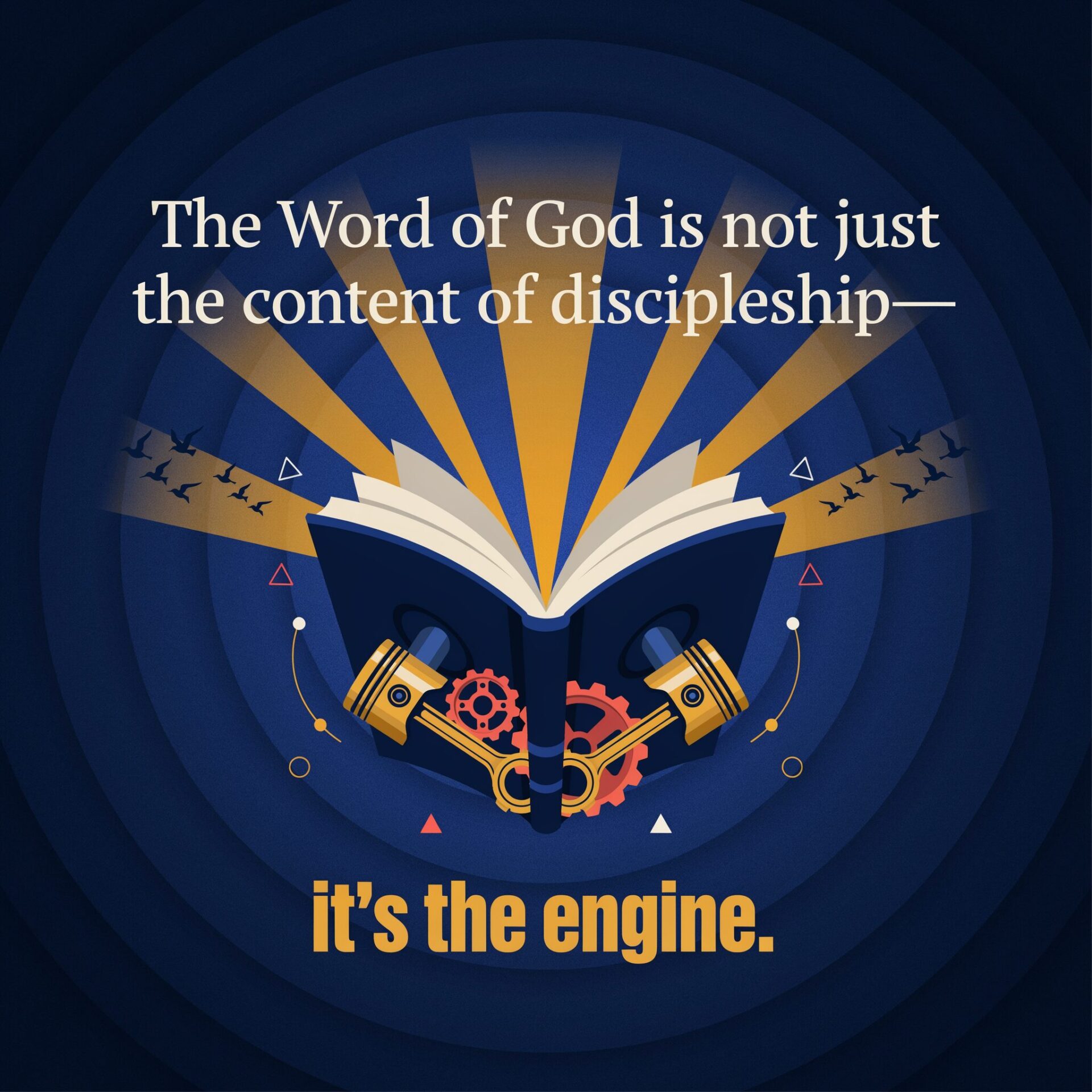
That ten-year-old girl taught me something I came home to tell you: the Word of God is not just the content of discipleship, it’s the engine. Without Scripture, we cannot know God, grow in God, or reproduce what God has done in us. And when the Word is withheld, whether by oppressive systems or by our own neglect, disciples die on the vine.
As we begin today, let me show you three things I saw with my own eyes while I was in Italy and explain how they impact us in this new effort to ensure every member of our church is growing in the right ways.
1. The Word that saves.
2. The Grace they must earn.
3. The System of Stagnation
I. The Word That Saves
It all starts with something we take so casually that we’ve forgotten it’s a miracle. You own a Bible and are encouraged to read it. You probably own several — one by the bed, one on the shelf, and a couple of apps on the phone you’re holding right now. You have them in your own language and can read them anytime, anywhere, with anyone, without any resistance. It’s something you and I take for granted every day. But we shouldn’t.
I want you to understand that this is not normal in many other places or throughout time. For most of church history, and in much of the world still today, it is a rare privilege. And it is not a small thing, because the Bible isn’t just a book about salvation. It is the instrument the Spirit uses to save. The Word and the Spirit work together. The Spirit does not save apart from the Word, and the Word does not save apart from the Spirit. But when God’s Spirit takes God’s Word and applies it to a human heart, dead sinners come to life.
Listen to how Paul lays out the chain in Romans 10. Every single link depends on the Word arriving:
Romans 10:13–17 ESV
13 For “everyone who calls on the name of the Lord will be saved.” 14 How then will they call on him in whom they have not believed? And how are they to believe in him of whom they have never heard? And how are they to hear without someone preaching? 15 And how are they to preach unless they are sent? As it is written, “How beautiful are the feet of those who preach the good news!” 16 But they have not all obeyed the gospel. For Isaiah says, “Lord, who has believed what he has heard from us?” 17 So faith comes from hearing, and hearing through the word of Christ.
- Calling depends on believing.
- Believing depends on hearing.
- Hearing depends on the Word being carried to them.
But if you pull out that bottom link and keep the word of God from the people, the whole chain collapses. No hearing. No faith. No salvation.
Peter says it just as plainly: we are “born again —not of perishable seed but of imperishable—through the living and enduring word of God” (1 Peter 1:23). The Word is the seed of the new birth. And Paul reminds Timothy that he had known the Scriptures from childhood, which “are able to make you wise for salvation” (2 Timothy 3:15). From childhood. Hold onto that phrase.
Here is what I found in Isola. We taught the kids the Exodus: the ten plagues, the Passover, and the night the death angel passed over the blood-marked doors, which foreshadowed Jesus, the Lamb of God who was the sacrifice for our sins. Most of them had never heard any of it. At one point, I asked my group why Pharaoh treated the Israelites so cruelly. Many of them ventured a guess, half question, half answer:
“Because… they were Catholic?”
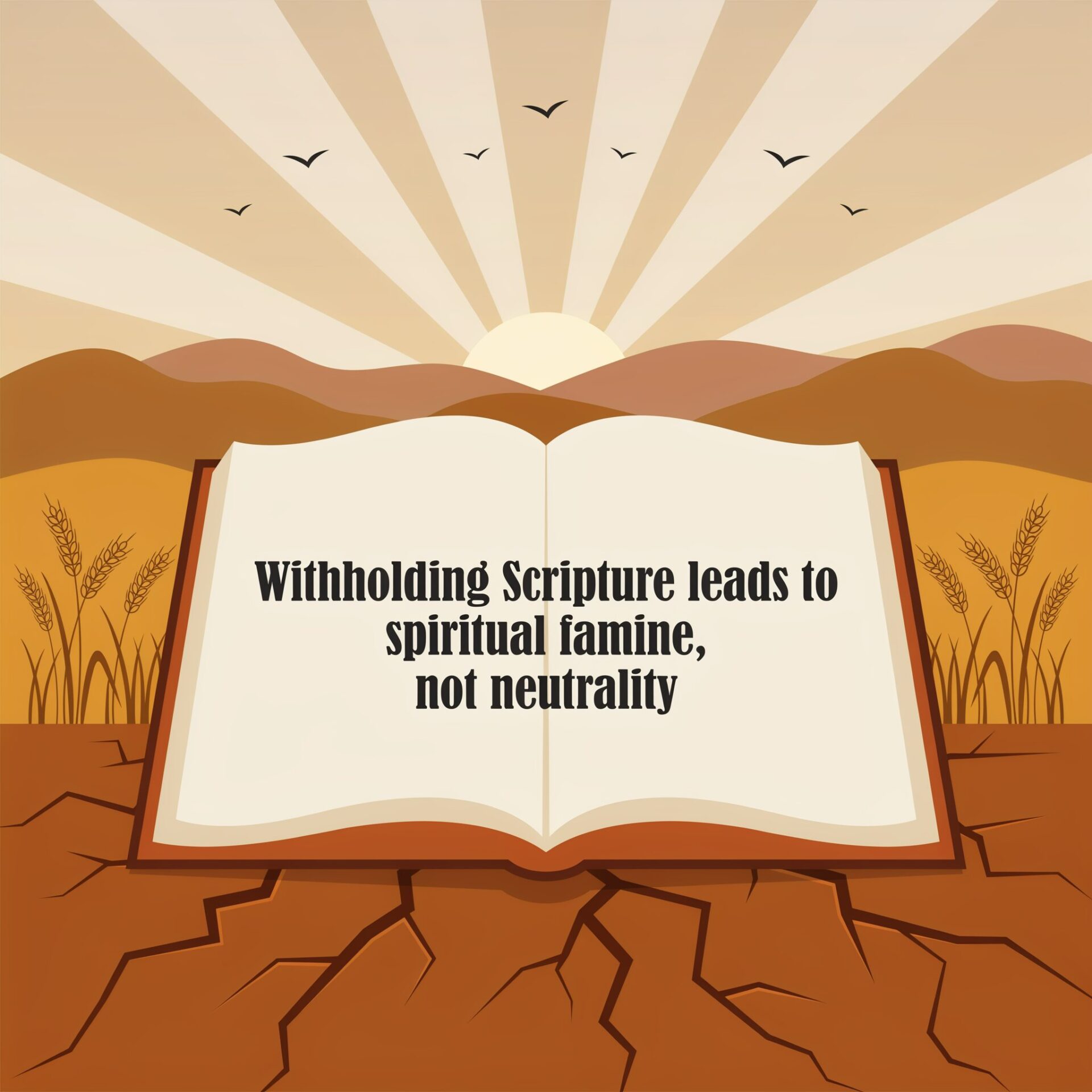
I chuckled to myself for about half a second. Then it broke my heart. These kids had no biblical knowledge because they either came from a secular household or from the Roman Catholic Church, which doesn’t allow its people to interpret the Bible for themselves. And the larger problem is that if their minds aren’t filled with scripture, they’ll be filled with something else. Withhold the Word from a child, and you don’t get a blank slate; you get a slate filled with whatever’s lying around or being offered by the culture. The way these kids soaked up their memory verse showed they were starving for a meal no one had ever set before them. The chain in Romans 10 had been cut at the source, leading to spiritual starvation.
What is truly tragic about all of this is that the way of salvation was being withheld in a country full of beautiful churches.
But here’s another thing that haunted me: it wasn’t just that they didn’t know the Bible. It’s that they were being taught a gospel that can’t save them and doesn’t empower them.
II. The Grace They Must Earn
Now I want to be careful here, and I want you to hear my heart. Many Catholics know and love Jesus, so I’m not putting individual hearts on trial this morning. What I do want to explain to you is what the Roman Catholic system officially teaches, and why it left a town full of children spiritually hungry.
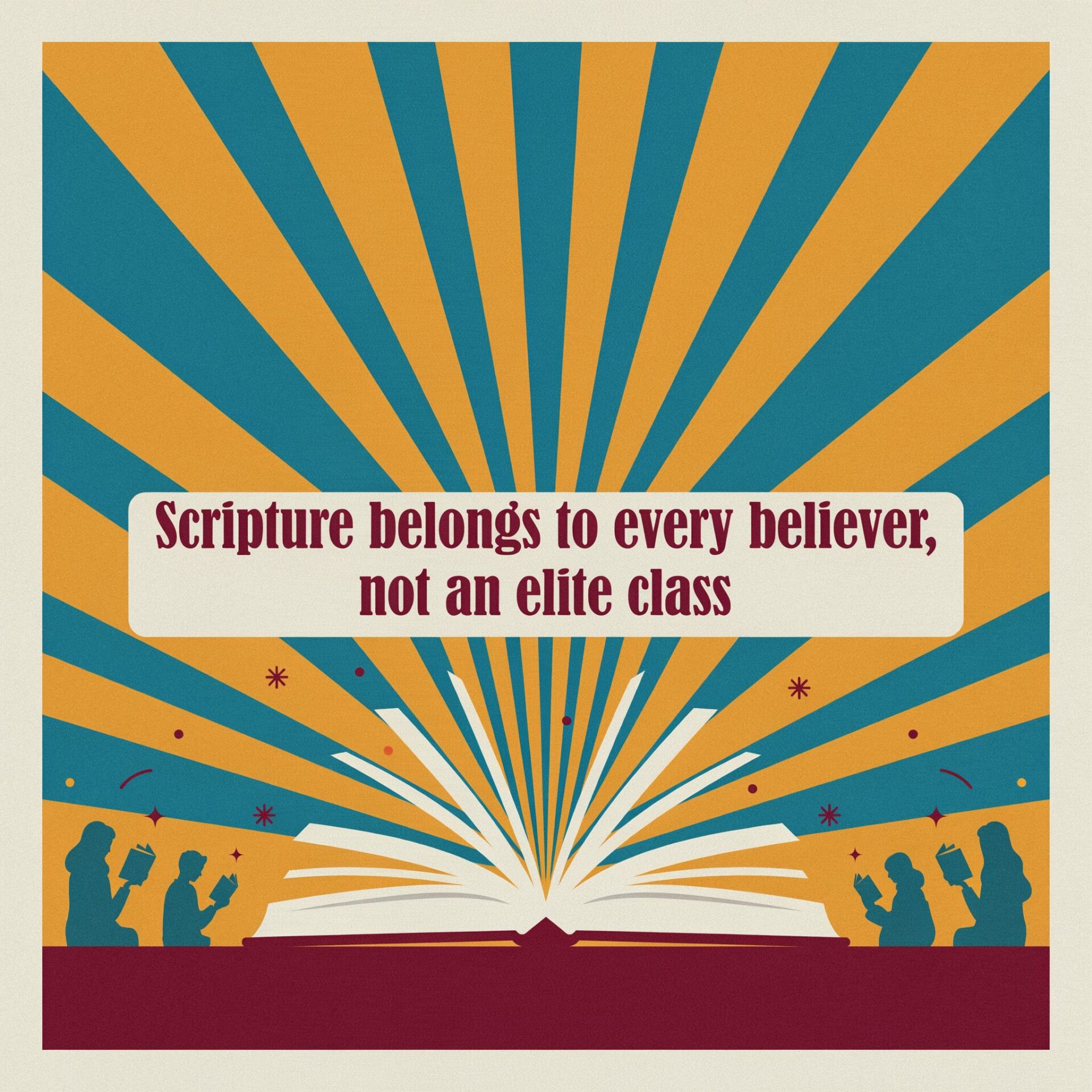
In Roman Catholic teaching, the interpretation of the Bible is not left to individuals. Instead, the authority to define its meaning belongs to the church’s teaching office and priests. This contrasts sharply with the Reformation’s slogan: sola Scriptura—Scripture alone. The Reformers argued that the Bible is not reserved for a priestly elite but is the inheritance of every believer. It’s understandable, sufficient for guidance, and holds authority over all tradition. To withhold it is to withhold Christ Himself, since the Scriptures testify of Him (John 5:39). The average believer tends to receive rather than seek out the Scriptures independently. As a result, especially in a culture that is nominally Catholic, I observed a disturbing biblical illiteracy all week—stunning and heartbreaking. However, the deeper issue extends beyond the book to the gospel itself. A Bible-believing church’s answer to “What must I do to be saved?” is always grace, which is a gift from start to finish.
Ephesians 2:8–9 CSB
8 For you are saved by grace through faith, and this is not from yourselves; it is God’s gift—9 not from works, so that no one can boast.
Rome’s approach differs by offering salvation through seven sacraments administered by the church, with individuals working towards it throughout their lives. Three sacraments encapsulate the core process: Baptism initiates salvation, Confession grants forgiveness through a priest, and the Eucharist—or communion—continually infuses grace. In this model, grace becomes a commodity, controlled by the clergy who hold the key to its storage. A troubling example from Isola highlights this: a priest threatened to withhold first communion from children whose parents allowed them to attend the evangelical camp. Initially, it seemed petty, but it revealed a deeper control—threatening to withhold the grace deemed essential for salvation, effectively cutting off access to heaven.
He was using their salvation as a bargaining chip. Do you see the contrast? In the gospel of grace, salvation is a gift freely given by God through Christ alone, received by faith alone. In a works-based system, salvation is a carrot dangled by human gatekeepers. One produces freedom and assurance. The other produces fear and bondage. One leads to a relationship with a system. The other leads to a relationship with Jesus.
And that is the moment the whole thing hit me like a gut punch. If a church teaches that you must earn and maintain your salvation through its sacraments, it is preaching a different answer to the most important question a human being can ask. Paul does not soften this:
Galatians 1:8 CSB
8 But even if we or an angel from heaven should preach to you a gospel contrary to what we have preached to you, a curse be on him!
This isn’t a line I drew. Rome officially drew it at the Council of Trent, where the church declared a formal curse on anyone who says that a sinner is justified by faith alone. They wrote it down almost five hundred years ago, and they have never erased it. So this isn’t just another flavor of Christianity alongside ours, like Baptists and Methodists arguing over secondary issues. A gospel of grace-plus-works is a different gospel. And a different gospel cannot save. And I saw its harmful effects up close.
III. A System of Stagnation
When you aren’t allowed to interpret scripture, are told to rely on a priest to know what it says, and are told that if you just follow the sacraments, you’ll have heaven, you don’t seek God, and you certainly don’t invest in others. You become dependent on leadership to tell you what to do. When zoo animals are fed by humans all the time, they lose their natural instincts. They become unhealthily dependent. In a way, that is what I saw.
That would explain the sobering stats. Italy is roughly one percent evangelical. One. A modern, wealthy, first-world nation that is “Christian” in the eyes of the world because the Vatican sits within its borders, and the overwhelming majority are relying on a gospel that cannot save or sanctify.
Italy may be the most forgotten mission field on earth.
We send missionaries across oceans to people we’ve labeled unreached. Italy doesn’t make those lists because the world counts a cathedral on every corner and calls it reached. But a country full of churches and empty of the gospel and spiritual growth in the Word isn’t reached. It’s a famine dressed in fancy clothes.
In these conditions, discipleship isn’t pursued. When all eyes are on Rome, no one is looking at each other. Their system doesn’t equip the saints for the work of service; therefore, the number of workers is incredibly sparse. Without overexaggerating, I can say that Italy is a spiritual desert. There are very few links in the chain to tether the people to the Word of God.
That reality should bring us to our knees in prayer for them and in gratitude for the gift of His Word and His gospel.
So here’s where we’ve landed so far: the Word saves. The gospel is grace. And both have been given to us freely. Now the question is: what do we do with what we’ve been given? That brings us to the third thing I saw in Italy—and the heart of our text today.
IV. The Family That Multiplies
So let me bring you back to that little girl, and her one verse. Scripture doesn’t just give you new life, it feeds the life it gives. Peter writes:
1 Peter 2:2 CSB
2 Like newborn infants, desire the pure milk of the word, so that by it you may grow up into your salvation…
That is exactly what I was watching. A newborn craving milk because that is what newborns are built to do. And the psalmist tells us why it matters so much:
Psalm 119:11 CSB
11 I have treasured your word in my heart so that I may not sin against you.
The Hebrew there for “treasured” is tsaphan — to hide away something precious, the way you’d bury treasure. That little girl was burying treasure in her heart, one verse at a time. And do you know which verse we gave her? First John 2:2:
1 John 2:2 CSB
2 He himself is the atoning sacrifice for our sins, and not only for ours, but also for those of the whole world.
Of all the verses, that child was memorizing the gospel of grace that the priest never told her. But here is the heartbreak I carried home. That seed was planted, and most of those children have no one to water it. A camp can plant. But a seed with no one to tend it withers. When we flew home, most of those kids had no evangelical believer to return to, no church to belong to, no older saint to open the Book with them next week or next year. They got one taste. And the question that has burdened me since is simple: who waters them now?
That question is exactly why multiplying is the engine of the whole map. Look at our text and notice that everything we’ve talked about today is hiding inside our text:
2 Timothy 2:1–2 CSB
1 You, therefore, my son, be strong in the grace that is in Christ Jesus. 2 What you have heard from me in the presence of many witnesses, commit to faithful men who will be able to teach others also.
Let me show you what’s packed into these two verses.
First, notice the foundation: “Be strong in the grace that is in Christ Jesus.” Not strong in your own effort. Not strong in your own discipline. Strong in grace. Paul is saying: the same gospel that saved you is the power source for everything that follows. You cannot multiply disciples by willpower. You do it by grace.
Second, notice the method: “What you have heard from me.” This is not secondhand tradition or human wisdom. It’s apostolic teaching: the Word of God, delivered, received, and now ready to be passed on. Paul is handing Timothy a deposit.
The word Paul uses for “commit” is paratithēmi — to deposit something valuable for safekeeping, the way you’d hand a treasure to someone you trust. And count the generations in that one sentence: Four generations in one sentence. Paul → Timothy → faithful men → others. That’s multigenerational discipleship in twenty-six words.
That is a central thread running throughout the letter. Paul reminds Timothy that his faith came down through his grandmother Lois and his mother Eunice (2 Timothy 1:5). He says the Scriptures saved him (3:15) and matured him, making “the man of God complete, equipped for every good work” (3:16–17). And then he says, “Now hand it on.” Saved by the Word. Grown by the Word. Passed down, person to person, throughout time until Jesus returns.
The Scriptures you have in your Bible have reached you in the very same way… carried, entrusted, generation to generation, all the way back to the early church.
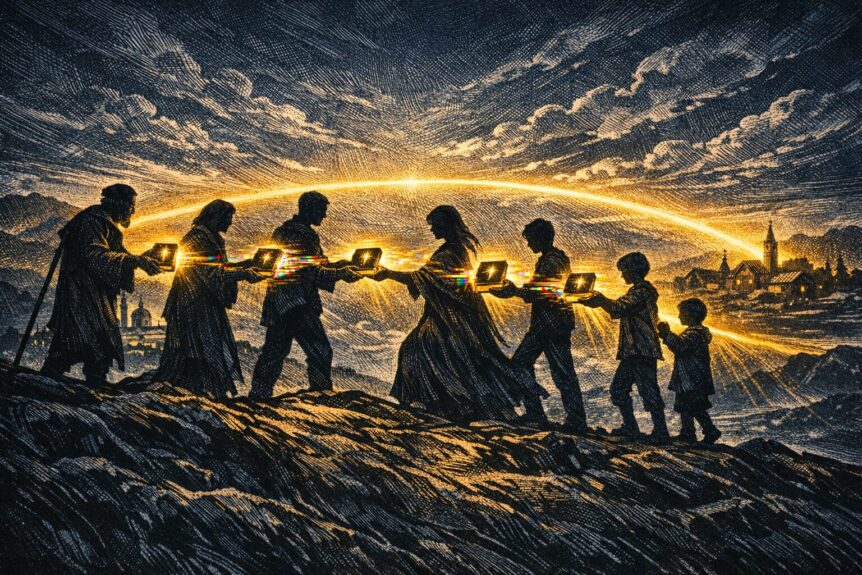
You are a link in that chain. The question now is whether the chain keeps going through you.
You remember the doubling penny from last time… slow and unimpressive for weeks, then suddenly unstoppable. That is kingdom math, and it’s the answer to the famine. Addition reaches a camp. Multiplication reaches a nation. And it’s the only thing that turns a one-week camp into a lifetime of growth and replication.
So let me hold up a mirror. Those children in Isola lacked three things: an open Bible they were encouraged to read for themselves, an understanding of grace that flows from a relationship with Jesus rather than from an effort to earn it, and disciple-makers who would walk intentionally with them as they grow. I learned that, on average, a town of 35,000 people might have one evangelical church. ONE. The issue there isn’t willingness… It’s capacity.
Now, look around this room. We have all three. They had none.
As we commit ourselves to one another, mature in God’s Word, and exercise our gifts, we will naturally begin to invest in others. But don’t let that word “naturally” fool you. This takes intentionality. It takes sacrifice. It takes a daily decision to live out our church’s purpose: to make fully-formed disciples from Ashe County to the nations.
The question before us today is this: We have the capacity. Do we have the willingness?
Conclusion: Will You Be the Link That Holds?
So let me bring this home with one final image.
That little girl in Isola sat and read one verse for sixty minutes. She buried treasure in her heart. And when I left, I didn’t know if anyone would ever open the Bible with her again. I still don’t.
But here’s what I do know: you have people in your life right now who are waiting for you to open the Word with them: your child, a believer in this church, a neighbor who’s been asking questions, or a coworker who’s watching your life.
They’re waiting. Not for you to be a scholar. Not for you to have all the answers. Just for you to be one step ahead of them, willing to say, “Let me show you what God has shown me.”
Paul told Timothy, ” Take what you’ve received and entrust it to faithful men who can teach others also. That’s four generations. That’s the chain. And every single one of us in this room is a link in it.
The question is not whether you’re capable. The gospel doesn’t call the qualified; it qualifies the called. The question is whether you’re willing.
Are you willing to sacrifice an hour a week to intentionally disciple one or two others? Are you willing to open your Bible with your kids at the dinner table? Are you willing to invite that new believer over for coffee and walk through a book of the Bible together? Are you willing to be the one who waters the seed that was planted? If you don’t, who will?
And we won’t leave you hanging. The Elders are going to equip you. In the coming weeks, we’ll release pathways, tools, and resources to take the guesswork out of discipleship. You won’t have to wonder what to do or how to do it. We’ll show you. But we can’t make the decision for you.
Today, I’m asking you to make one simple commitment: “In light of what I’ve heard, I’m willing to become a disciple-maker. I’m willing to be the link that holds, not the link that breaks. And I’m willing to start this week, not ‘sometime.’”
If that’s you, I want you to do something tangible. Don’t leave here today without taking one action step: Talk to an Elder after the service and say, “I’m in. Where do I start?” and then make a list of 3-5 people whom you think you could pour into.
And as you go, don’t forget Isola. Pray for that one percent. Pray for the children who sat in my class and memorized 1 John 2:2. Pray that God would raise up laborers for that forgotten mission field. But remember this: Ashe County needs you just as much as Isola does. God’s Word is entrusted to us so that it multiplies through us. We must become the link that holds, not the link that breaks.
FAQs
1. What does it mean to “be strong in grace”?
It means your strength for discipleship doesn’t come from discipline or personality, but from the grace of Christ. The same gospel that saved you is the power that sustains and multiplies through you.
2. Do I need to be highly trained to disciple someone?
No. You need to be faithful and willing. Discipleship is not about having all the answers—it’s about opening the Bible with someone and walking with them one step at a time.
3. Is this sermon saying Catholics cannot be saved?
The focus is not on judging individuals but on evaluating systems. Any gospel that adds works to grace departs from the biblical gospel. Salvation is by grace alone through faith alone in Christ alone.
4. Why is Scripture so central to discipleship?
Because the Word is how God reveals Himself, saves sinners, and grows believers. Without it, there is no true conversion or lasting spiritual growth.
5. What does multiplication actually look like in real life?
It looks like one believer intentionally investing in one or two others—reading Scripture, praying, and helping them grow—until they are able to do the same with someone else.
6. Isn’t this just for pastors or leaders?
No. Paul’s instruction wasn’t just for church professionals. Every believer is part of this chain. Discipleship is the normal Christian life.
7. What if I feel unqualified or inconsistent?
Grace is the starting point, not the reward for having it together. You don’t need perfection—you need willingness and dependence on Christ.
8. Where do I start this week?
Start simple: identify one or two people, set a time, and open the Bible together. Faithfulness in small steps is how multiplication begins.